

Exploring Tampines Chinese Temple | Traditions, Festivals & Charity
Tampines Chinese Temple was one of the places that gave me a completely different side of this neighbourhood. Tampines is well known for its shopping centres, food spots, and transport connections, but visiting this temple reminded me that there’s a quieter, more traditional layer to the town too. It’s a well-established place of Chinese worship in eastern Singapore, serving devotees, residents, and visitors seeking spiritual guidance, blessings, and cultural continuity, and it sits naturally within a mature residential estate rather than standing apart as a tourist attraction.
- Address: 25 Tampines Street 21, Singapore 529394
- Phone: +65 6783 0655
- Opening Hours: Daily, 6:30 AM – 8:30 PM
My First Impression of the Temple
What stood out to me right away was that this feels like both a place of worship and a community space, not somewhere that exists mainly for visitors to look around. Its purpose is closely tied to everyday religious practice prayers, offerings, blessings, ancestral remembrance, and festival observances that carry on regardless of who’s visiting that day.
I could understand why local devotees keep coming back regularly. The temple gives people a familiar space to maintain their traditions while living in a very modern, developed part of Singapore. I also found the contrast interesting a much older cultural tradition existing quietly inside today’s Tampines, surrounded by HDB blocks and neighbourhood shops rather than isolated somewhere purpose-built for tourism.
The Religious Character
The temple follows a combination of Buddhist and Taoist worship traditions, which is common among Chinese temples in Singapore. Inside, the religious environment includes multiple altars, incense burners, oil lamps, and ancestral tablets none of it purely decorative, since each element plays a role in the worship practices carried out there.
From what I learned during my visit, people come here for a range of reasons: some seek blessings for health and longevity, others pray for family harmony, protection, business prosperity, or academic success, and ancestral remembrance is another significant part of the tradition. That made the visit feel more meaningful to me I wasn’t just looking at an architectural landmark, I was seeing a space that still has a genuinely practical spiritual role for the people who use it.
The Altars and Deities
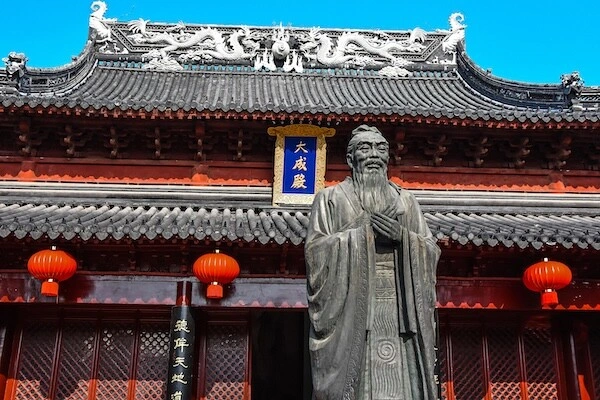
One detail I paid close attention to was the range of religious figures and altars inside. Traditional Chinese temple worship can involve several deities, each tied to a different aspect of spiritual life. The figures associated with this temple include Guan Yin (Goddess of Mercy), Guan Di (God of Righteousness and Loyalty), Tian Gong (Heavenly God), City or Earth Deities, and ancestral tablets, with devotees making offerings such as incense, fruit, flowers, and tea according to established practice.
I found the idea of multiple altars particularly interesting because it gives the interior a layered structure rather than one single focal point, different areas of the temple serve different spiritual purposes.
Ancestral Worship
Ancestral worship is another aspect that stood out to me. Ancestral remembrance is a significant part of Chinese religious tradition, and designated areas within the temple hold ancestral tablets, which become particularly relevant during periods such as the Qingming Festival, when families remember and honour their ancestors. For me, this helped explain why the temple carries significance well beyond ordinary daily prayers it also gives families a place to maintain traditions connected to earlier generations.
Incense and the Atmosphere
The atmosphere inside is one of the most distinctive things about visiting a traditional Chinese temple. The incense burners, oil lamps, lanterns, and organised prayer areas create a visual and sensory environment that feels very different from the residential streets just outside.
Incense plays an important part in worship here, and visitors who take part in the ritual are expected to follow the temple’s practice the customary approach involves bowing three times after lighting the incense sticks, then placing them upright in the designated burner. I’d recommend that first-time visitors take their time and simply observe what others are doing rather than assuming they already know the correct procedure.
The Architecture
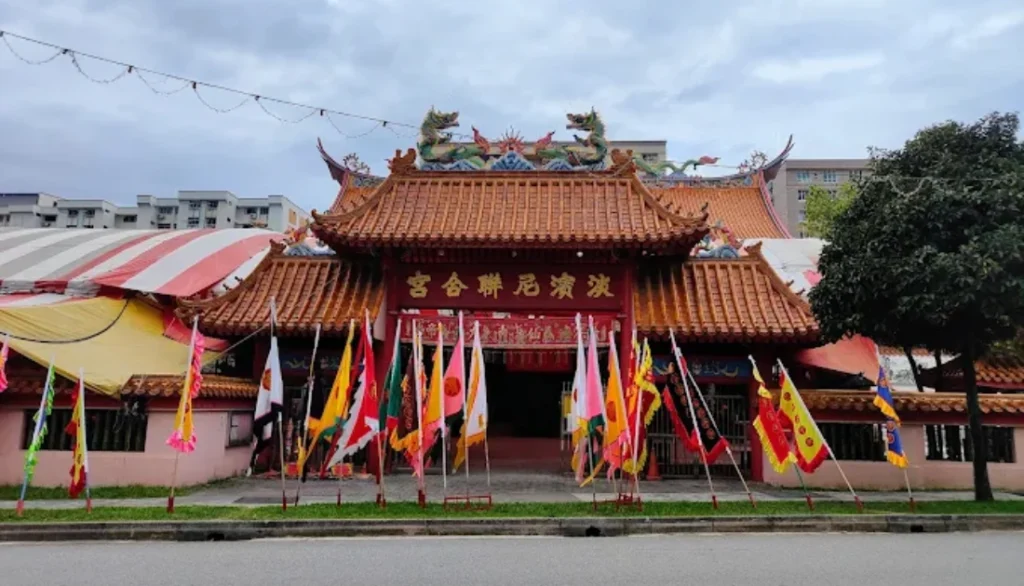
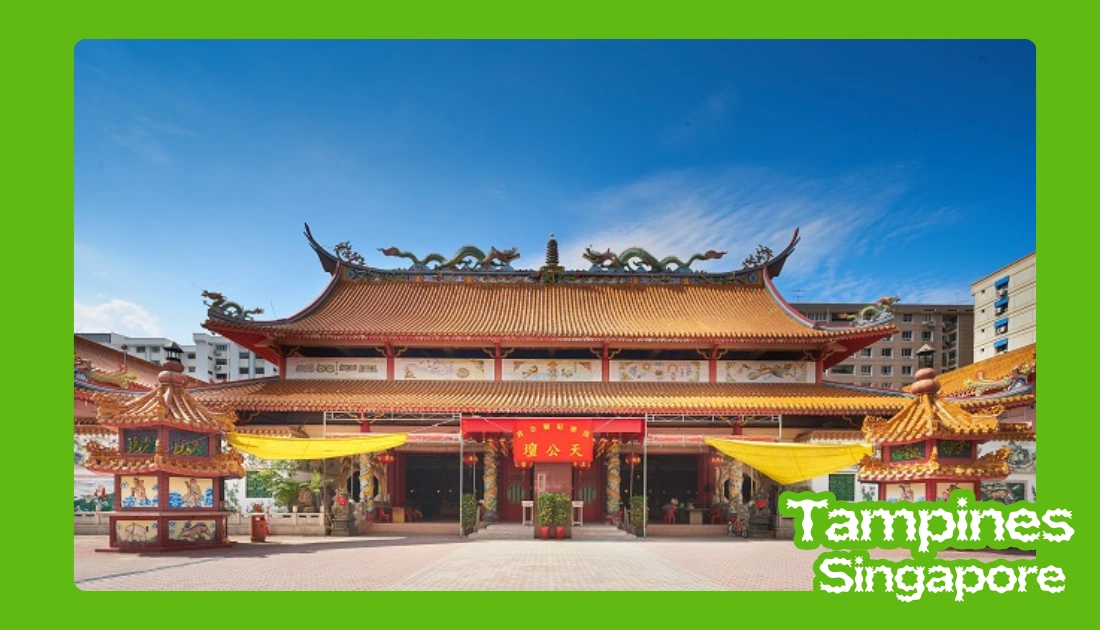
Traditional Chinese temple architecture puts a lot of weight on symbolism, balance, and visual detail, and this temple’s design reflects that curved rooflines, dragon and phoenix motifs, red pillars, and guardian figures in stone or ceramic. None of it is purely decorative; the colours, shapes, and details are tied to cultural and religious symbolism.
Inside, the layout follows a clear hierarchy: a central altar for the primary deity, secondary altars, sections for ancestral tablets, and an incense courtyard area. Walking through it, I could see how the physical design of the space actually supports the way people move through and use it during worship.
Festivals at the Temple

Lunar New Year
Lunar New Year is one of the most significant celebrations here. Devotees visit to offer the first incense of the year, receive prosperity blessings, and take part in ceremonial prayers. Crowds are typically much larger during this period.
Qingming Festival
During Qingming, families perform ancestral rites and remembrance ceremonies, and the temple provides a structured setting for respectful offerings.
Hungry Ghost Festival
This period involves rituals dedicated to wandering spirits and ancestral appeasement, with offerings and chanting ceremonies taking place.
Mid-Autumn Festival
The Mid-Autumn Festival has a different character altogether, focused more on reunion and thanksgiving, sometimes including community gatherings or lantern-related activities.
I’d personally expect a festival-period visit to feel quite different from an ordinary weekday one, mainly because of the larger crowds and additional religious activity worth keeping in mind if you’re planning around a quieter experience.
Getting There
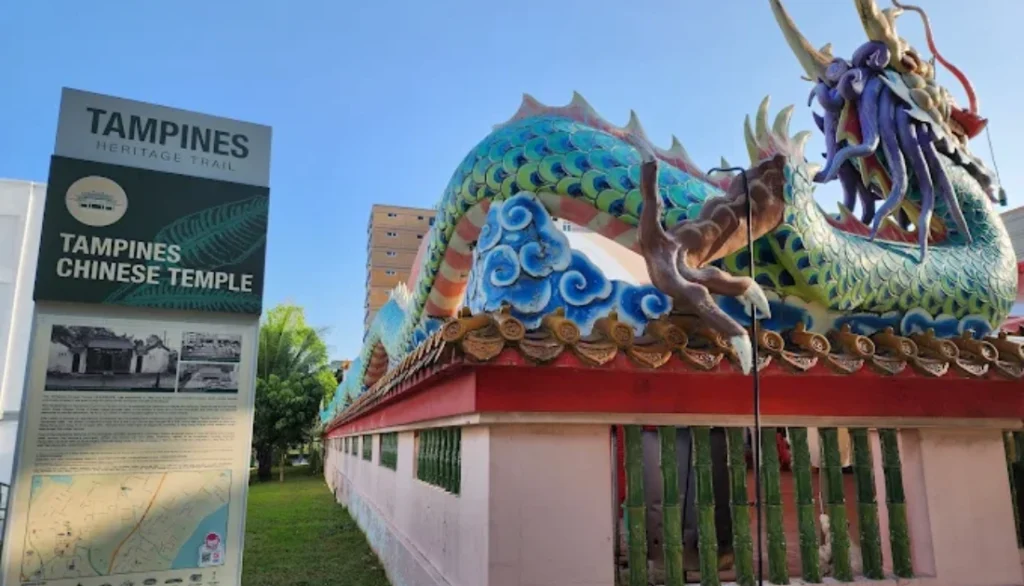
The temple’s location on Tampines Street 21 makes it fairly easy to build into a wider Tampines visit. The nearest MRT station is Tampines MRT (EW2/DT32) from there, head toward Tampines Bus Interchange and take a connecting bus serving Tampines Street 21, followed by a short walk of around 3–5 minutes to the temple, for a total travel time of roughly 10–15 minutes from the MRT.
If you’re coming from further away the temple’s own reference route from Toa Payoh, for example, involves the North–South Line, a transfer to the East–West Line, alighting at Tampines MRT, and then a bus to Tampines Street 21, at around 45–60 minutes total I’d allow some extra time and check current routes on the LTA app before travelling, since bus schedules can shift.
Nearby landmarks include Tampines MRT Station, Tampines Bus Interchange, HDB residential blocks, and neighbourhood shops and coffee stalls, which makes it easy to pair a temple visit with something else nearby rather than treating it as a standalone trip. If you’re curious about other faiths represented in the town, Holy Trinity Church is another religious site worth knowing about in the area.
Parking
Parking is one thing I’d plan around carefully. Only limited roadside parking is available near the temple, so public transport is generally the more practical option particularly during major festivals, when visitor numbers can rise significantly. If you’re driving, I wouldn’t assume a convenient space will be free; it’s worth allowing extra time to find one.
Religious and Community Services
The temple isn’t just somewhere people drop in to pray casually it runs organised religious services and activities, including:
- Daily prayer sessions
- Deity birthday celebrations
- Blessing ceremonies
- Memorial rites
- Oil lamp sponsorship
Devotees can also request specific prayers through the temple’s established procedures this organised structure is something I noticed clearly when looking at the temple as a community institution rather than just an open space for informal worship.
Charity and Community Work
One detail I found genuinely worthwhile was the temple’s charitable involvement. It has participated in initiatives with the National Kidney Foundation (NKF), which can include fundraising, public donation support, and community awareness efforts. It’s a reminder that the temple’s role extends beyond religious ceremonies into broader social and charitable work.
Donations and Offerings
Visitors may also come across different types of contributions connected to temple activities, including general temple maintenance donations, festival sponsorship, oil lamp offerings, and ancestral tablet maintenance fees. Since this is an organised religious institution with a registered Unique Entity Number (UEN) for financial transparency, I’d recommend asking the temple directly if you want to make a specific type of donation or need official documentation.
Temple Etiquette for First-Time Visitors
If you’ve never visited a Chinese temple before, etiquette is one of the most important things to get right. I’d dress modestly, keep my voice low inside the prayer halls, and follow any instructions given around incense or ceremonies. I’d also avoid walking through or interrupting an active ritual, and if I wanted to take photographs, I’d be respectful of worshippers and ask permission rather than photographing people without their consent.
Accessibility
The temple is generally accessible, though if you have specific mobility requirements, it’s worth calling ahead to confirm what facilities are available for your needs something I’d especially suggest for older visitors or anyone who wants to be sure the visit will be comfortable before making the trip.
Who Manages the Temple
The temple is run by a management committee responsible for religious scheduling, financial governance, maintenance and upkeep, regulatory compliance, and community outreach a structured administrative side that sits alongside its spiritual function.
Frequently Asked Questions
What is the history of Tampines Chinese Temple?
The temple was established to serve Tampines’ growing Chinese population during the town’s residential expansion, and it evolved alongside Tampines’ development into a structured religious institution.
How do I get to Tampines Chinese Temple by MRT or bus?
Take the MRT to Tampines Station (EW2/DT32), then transfer to a bus serving Tampines Street 21, followed by a short walk to the temple.
What services does the temple offer to the community?
Daily worship, festival celebrations, ancestral rites, blessing ceremonies, and charitable initiatives including collaboration with the National Kidney Foundation.
Is there parking available near the temple?
Only limited roadside parking is available, so public transport is recommended, especially during festival periods.
Can visitors participate in temple events or rituals?
Yes, visitors are generally welcome to observe or respectfully take part in public ceremonies, provided temple etiquette is followed.
My Overall Experience
Visiting Tampines Chinese Temple gave me a different perspective on this part of Singapore. It showed me that Tampines isn’t only about shopping centres, food spots, HDB estates, and transport hubs there are also longstanding religious and cultural institutions woven into everyday community life here. What I appreciated most was the combination of religion, tradition, family remembrance, and community involvement, all sitting quietly within a very modern residential estate.
My biggest practical takeaway: check the latest opening information before you go, especially around public holidays or festivals, lean on public transport rather than counting on roadside parking, and treat it as an active place of worship rather than a photo stop. Taking a few moments to observe your surroundings and follow the temple’s etiquette makes the whole visit more comfortable for you and for the people who are there to pray.