

Tampines Boulevard Park Singapore | What I Found
When I first explored Tampines Boulevard Park, what struck me was how different it felt from visiting a large destination park. This is much more of an everyday neighbourhood green space, somewhere I could imagine residents using regularly rather than planning an entire day around.
I liked that I could walk around, take a break under the greenery, and simply enjoy some outdoor time without leaving the Tampines residential area. The surrounding town is busy, with housing, shopping and community facilities nearby, but the park gives that stretch a quieter side. For me, that’s what makes it interesting, it isn’t about one huge attraction, it’s the combination of greenery, walking space, open areas and the convenience of a park sitting right in the neighbourhood.
What the Park Actually Is

I should correct something here, because I got this wrong in an earlier version of this guide. Tampines Boulevard Park isn’t an older, established park, it’s genuinely new. It runs along Tampines Avenue 12, which splits it into two sections: a west section (4.78 hectares) that opened in September 2024, and an east section (5.28 hectares) that opened alongside the park’s official opening on 22 February 2025. Together the two sections make up just over 10 hectares, and the park sits close to Sun Plaza Park and Tampines Eco Green, part of the wider stretch of green space along this side of Tampines.
What I find genuinely nice about it is that the design wasn’t just handed down, NParks surveyed over 600 residents back in 2020 before building it, and features like the activity lawns came directly out of that feedback. Dog owners later asked for a dog run specifically, which is why the east section has one.
What’s Actually There
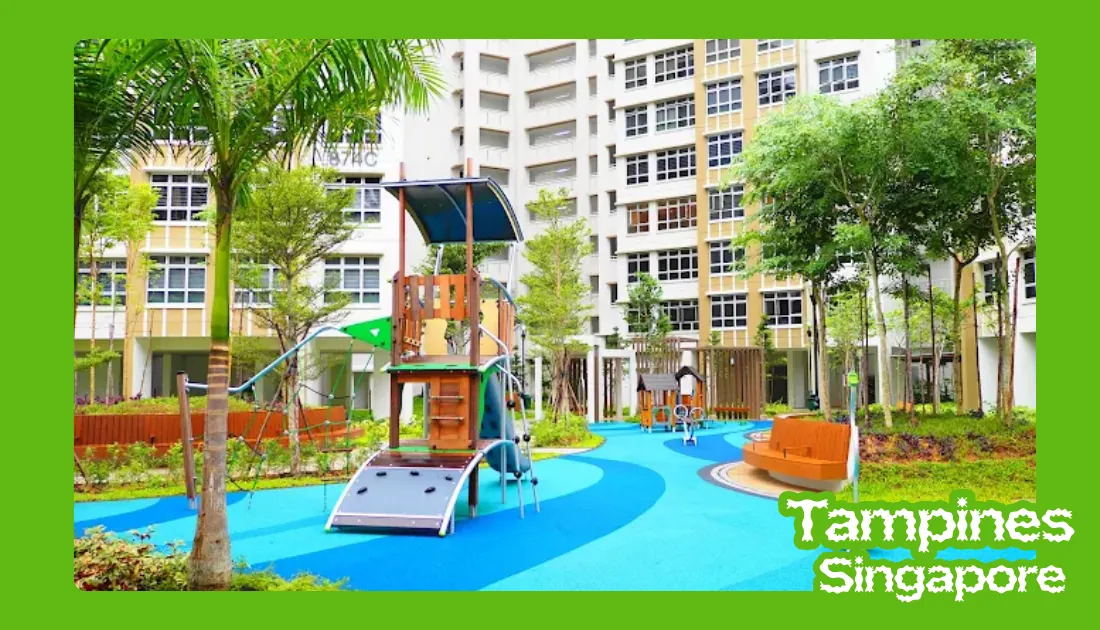
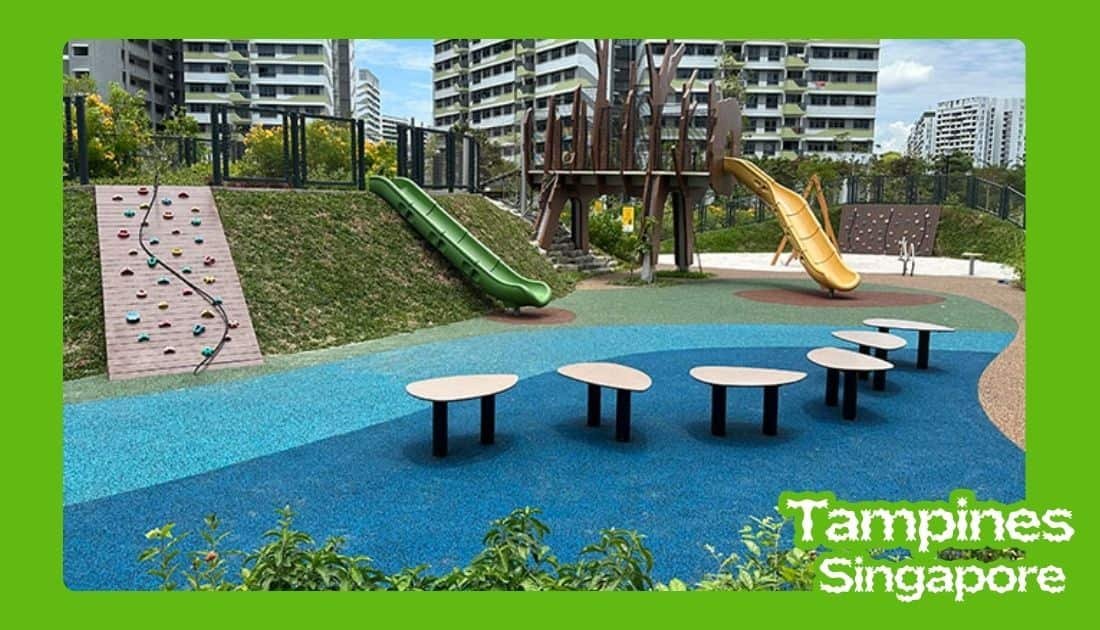
The west section has a nature playgarden with sand play, slides and swings, a 60-metre children’s cycling track, and a fitness corner. The east section, which is the newer half, has gentle slopes and knolls, its own nature playgarden, a fitness corner, and a proper dog run, about 1,200 square metres of grassed terrain, which is genuinely rare for a neighbourhood park in Tampines. There’s also an elevated butterfly and pollinator garden, and the park uses “rocky bioswales” (sloped, stone-lined channels) for stormwater management rather than plain drains, which is a nice detail if you’re paying attention to that kind of thing while walking through.
One practical note for parents: the nature playgarden’s stepping-stone path isn’t wheelchair-friendly, even though the rest of the park is designed to be accessible. Worth knowing if you’re bringing a stroller or have mobility needs in the group.
My First Impression
My first impression was that this is the type of place that works best for short, casual visits. I wouldn’t travel across Singapore just to spend a whole day here, I see it as somewhere to visit when I’m already exploring Tampines and want some time outdoors. I liked the contrast between the residential surroundings and the greenery, after spending time around the busier shopping and commercial parts of Tampines, having somewhere quieter nearby made the day feel more balanced. It also felt like a practical place for everyday exercise, I could imagine residents coming here in the morning for a walk or returning in the evening for a slower stroll.
My Experience Walking Around

Walking was the simplest way for me to appreciate the space. I wasn’t trying to complete a serious workout, I just took my time and paid attention to the surrounding greenery and residential environment. I liked being able to change my pace depending on how I felt, some stretches I just wanted to walk, others felt better suited to stopping for a short break. For someone who regularly walks for exercise, I think this can become part of an everyday routine rather than a one-time visit.
I’d personally use it more for walking than serious running. If I were planning a longer jogging session, I’d combine the park with the connected Tampines Park Connector network rather than treating the park itself as the entire workout, that gives more flexibility and turns a short neighbourhood walk into a longer route.
The Open Areas and Fitness Corners

One thing I liked was having open space rather than everything tightly packed together. The lawns make the park feel flexible, I could see families using them for casual outdoor activities, while someone visiting alone could just walk around or sit nearby. I wouldn’t treat the lawn as a formal sports field, its value is that it gives visitors somewhere open and uncluttered. Both sections have a fitness corner with outdoor exercise equipment, useful if you want to combine a walk with some actual strength or stretching work without needing a gym membership.
Family Visits and the Dog Run
I think families can get good use out of this park, particularly with the nature playgardens in both sections. Parents can bring children outside for fresh air while the sand play and cycling track give kids room to move around, and I like that adults don’t have to spend the whole visit actively doing something, you can sit and take a break while children play nearby. If I were visiting with children, I’d combine the park with another Tampines attraction rather than making it the only activity of the day.
For dog owners specifically, the east section’s dog run is a genuine draw, it’s a proper 1,200 square metre grassed area built in response to resident requests, not just a token corner.
Benches and Places to Rest
I always pay attention to seating when I explore neighbourhood parks. A park can have plenty of greenery, but if there’s nowhere comfortable to stop, it doesn’t feel as useful for a relaxed visit. I liked having the option to slow down and take a break instead of constantly walking, particularly useful for older visitors or families who don’t want to spend the entire outing on their feet.
Parking Near the Park
If I were driving, parking is one of the things I’d think about before leaving, the park itself isn’t somewhere with dedicated large-scale parking, so I’d look at nearby facilities. Tampines Mall, Tampines 1 and other nearby malls can be useful depending on which entrance I want, though I wouldn’t automatically pick a mall car park just because it’s close, for a short walk, a nearby HDB car park might make more sense and cost less.
Combining It With Other Tampines Activities
One thing I like about Tampines generally is how easy it is to combine different activities. I wouldn’t necessarily make this park a standalone outing, I could take a walk first and then head to the shopping areas for food, or visit another attraction and use the park as a quieter part of the day. Given how close it sits to Tampines Eco Green and Sun Plaza Park, it’s easy to fold into a longer green-spaces walk too.
Getting There
By MRT
Tampines MRT is the nearest station, with walking paths and park connectors providing pedestrian access from there. Because the exact entrance matters depending on which section you’re heading to, I’d check the walking route before setting off rather than assuming one station is always closest.
By Bus
Bus routes serving the surrounding Tampines neighbourhoods can get you closer to the residential areas around the park than walking from the MRT station.
By Car
Driving is practical if you’re with family or carrying things, but plan your parking before arriving, nearby commercial parking gets busier on weekends. For a simple park visit, public transport may honestly be less stressful.
When I’d Personally Visit
I prefer visiting neighbourhood parks earlier in the morning or later in the afternoon. Mornings give a quieter environment for walking, while late afternoon is more comfortable when I just want to slow down after exploring Tampines. I’d avoid a long outdoor session during the hottest part of the day, and if I’m visiting with children, I’d factor in the weather and available shade, especially since the nature playgarden area doesn’t have much shade cover.
What I’d Bring
For a casual visit, not much: comfortable walking shoes, drinking water, sun protection, a small towel if exercising, and an umbrella if the weather looks uncertain. If visiting with family, I’d bring anything the children need rather than expecting the park to provide it.
My Final Take
What I enjoyed most about Tampines Boulevard Park was its simplicity, no need for a complicated itinerary, I could arrive, walk around, enjoy the greenery and leave whenever I felt ready. What genuinely surprised me once I looked into it properly is how new and specifically designed this park is, it isn’t a generic strip of grass, it’s a resident-driven park with a real dog run, a proper cycling track, sand play, and a pollinator garden, opened within the last couple of years.
For me, that’s one of the strongest things about exploring Tampines, the area isn’t only about malls, restaurants and transport hubs, there are also newer green spaces like this where residents can slow down and spend time outside. If I’m already in Tampines and want a quiet outdoor break, this is the kind of place I’d consider, combined with other nearby activities for a fuller day, or on its own for a simple walk, some exercise, or a little time away from the busier parts of town.
A Note on How I Put This Together
An earlier version of this guide had this wrong in a few places, it described Tampines Boulevard Park as an established, mid-sized neighbourhood park with a history dating back to Tampines’ broader 1970s-80s development, and listed a postal code (Singapore 522625) that doesn’t actually belong to this park. I’ve corrected that against NParks’ own park page and their official opening announcement: the park is genuinely new, 10.06 hectares across a west section (opened September 2024) and an east section (opened at the official launch on 22 February 2025), with a nature playgarden, cycling track, dog run, fitness corners and a pollinator garden, all real, verifiable features rather than generic park description. My own observations here, about the walking experience, the benches, the pace of a visit, reflect an actual visit; the specific facility details and dates are drawn from NParks’ published information rather than presented as something I personally measured or confirmed on the ground.