

Tampines Group Representation Constituency | Guide to MPs, Areas & Elections
Tampines Group Representation Constituency (GRC) is a prominent electoral division in the eastern region of Singapore. Established in 1988 as part of the Government’s introduction of GRCs, it has been a long-standing political ward represented by the People’s Action Party (PAP) in Parliament. As a GRC, Tampines is a multi-member constituency designed to elect a team of Members of Parliament (MPs) as a group rather than individual members. Over the years, it has grown with the development of the Tampines area, one of Singapore’s mature residential and commercial towns, and has become a key locus for political engagement, local governance, and community programmes.
The constituency includes several residential and community clusters and remains a central focus during Singapore’s general elections. Political contests here are watched closely, as they reflect broader trends in voter sentiment in established heartland towns. In recent elections, Tampines has seen competitive races and boundary adjustments affecting voter demographics.
History, Prior to 2020, Extramarital Affair, 2025 Election
The GRC system, introduced in 1988, was created to ensure minority representation in Singapore’s Parliament and to promote multi-racial teams of MPs. Tampines GRC was one of the constituencies formed in this process, absorbing earlier single-member wards such as the old Tampines Constituency.
Before … 2020, Tampines GRC was a stronghold for the ruling PAP, regularly contested by opposition parties such as the National Solidarity Party (NSP). In GE2020, the PAP team won with around 66% of the vote, defeating the NSP slate.
In 2023, Tampines GRC drew national attention when one of its MPs, Cheng Li Hui, resigned from the PAP and Parliament following public revelations of an extramarital affair with then-Speaker of Parliament Tan Chuan-Jin. This resulted in internal role changes within the GRC team.
In the 2025 General Election, Tampines GRC saw significant boundary adjustments, absorbing a few polling districts from neighbouring Aljunied GRC and giving rise to a new Single Member Constituency (Tampines Changkat SMC) split off from parts of the ward. The PAP team, led by Minister Masagos Zulkifli, narrowly retained the seat with a reduced share of about 52% against a multi-cornered contest featuring opposition parties, marking one of the tighter electoral battles for the ward in recent history.
Purpose of GRCs in Singapore’s Political System
The Group Representation Constituency (GRC) system is a unique feature of Singapore’s electoral framework. Rather than electing a single MP per area, GRCs require voters to elect a team of MPs as a bloc during general elections. Each team must include at least one member from a minority racial community (such as Malay, Indian, or Other), ensuring diversity in parliamentary representation.
Introduced in 1988, the GRC system was intended to guarantee minority participation in political leadership and to encourage cross-community representation. This means smaller minority groups are less likely to be excluded from Parliament, as they might be in single-member seats. GRCs typically cover larger geographic and population areas than single-member constituencies, promoting broader collaboration among elected MPs.
While GRCs have been praised for guaranteeing minority representation, they have also been critiqued for making it more challenging for opposition parties to win seats due to the need to field full teams and the winner-takes-all nature of contests.
Role of Tampines GRC in Governance

Tampines GRC plays a crucial role in local governance and representation for residents of the eastern region of Singapore. MPs elected from the constituency serve in Parliament, participating in legislative debates, voting on national policies, and contributing to government oversight and development agendas.
Locally, Tampines GRC members work closely with residents’ committees and grassroots organisations to address community needs, manage local infrastructure projects, and organise programmes that improve quality of life. This includes town planning consultations, public feedback initiatives, and collaborative efforts to support social services, seniors, and families.
The GRC’s position as part of a mature and highly populated area also means its MPs are often involved in regional planning discussions, infrastructure development, and housing initiatives. Whether in community spaces or national platforms, Tampines GRC serves as a bridge between residents and policy-makers, ensuring local voices influence broader governance decisions.
Areas Covered Under Tampines GRC
Tampines GRC spans a large portion of the Tampines planning area in eastern Singapore, encompassing a mix of residential, commercial, and community spaces. The constituency is divided into several wards — Tampines North, Tampines Central, Tampines East, Tampines West, and Tampines Boulevard — each represented by an MP and supported by grassroots volunteers who engage with residents and coordinate local initiatives.
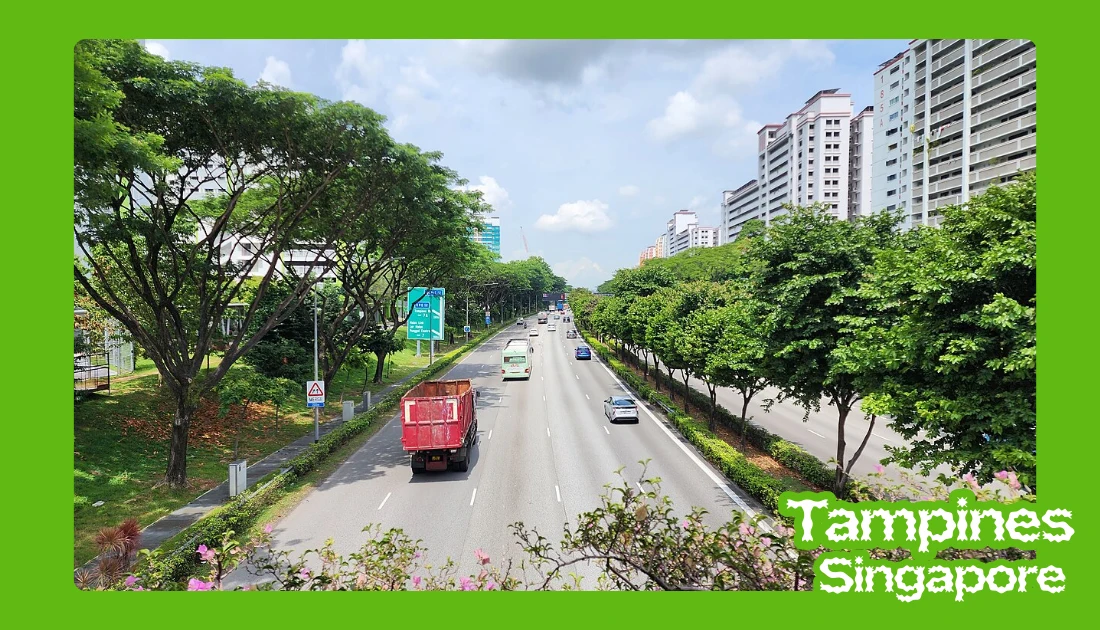
The area is primarily composed of public housing estates, with well-planned amenities such as markets, community centres, parks, and sports facilities that cater to the daily needs of residents. Key commercial hubs, including Tampines Mall, Century Square, and Our Tampines Hub, provide shopping, dining, and recreational options. The constituency is well-served by MRT stations and extensive bus networks, ensuring seamless connectivity within Tampines and to neighbouring towns. This integrated infrastructure supports both residential convenience and economic activity, making Tampines GRC a vibrant and accessible community.
Towns, Neighbourhoods & Blocks
Tampines GRC includes a mix of dense public housing estates, private condominiums, and mixed-use developments, serving a diverse residential population. Its neighbourhoods are organised around Tampines Avenue, Tampines Street, and adjacent precincts, with multiple blocks forming close-knit communities. The constituency encompasses both mature estates and newer Build-To-Order (BTO) projects, reflecting ongoing urban growth and population expansion. Residents benefit from nearby amenities such as markets, schools, parks, and community centres. This combination of established and emerging neighbourhoods positions Tampines GRC as a thriving residential hub that supports families, working adults, and elderly residents alike, while fostering strong local community networks. Municipal estate services are handled by the local town council office.
Geographic Scope
Tampines GRC is located in eastern Singapore, bordered by Pasir Ris–Changi GRC to the north and Aljunied GRC to the west, with southern sections transitioning into the newly formed Tampines Changkat SMC. The constituency spans several square kilometres, encompassing residential blocks, commercial hubs, parks, and community facilities. Its strategic location provides residents with convenient access to public transport, including MRT stations and bus services, as well as essential amenities such as schools, healthcare, and shopping centres. The geographic layout supports a well-integrated urban environment, balancing residential living, recreational spaces, and commercial activity within a cohesive and accessible planning area.
Members of Parliament for Tampines GRC
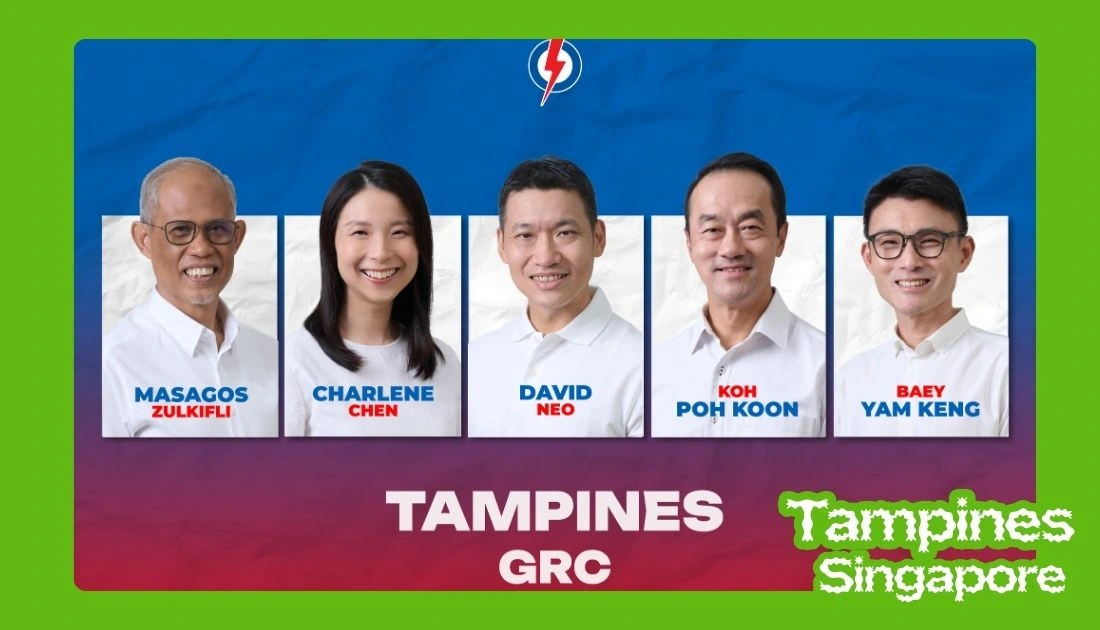
As of 2025, Tampines GRC is represented by a five-member team of MPs from the PAP:
- Baey Yam Keng
- Charlene Chen
- David Neo
- Koh Poh Koon
- Masagos Zulkifli
These representatives were elected as part of the PAP team and lead local constituency work under Tampines Town Council.
The MP Team

Tampines GRC is represented by a team of Members of Parliament (MPs), each responsible for engaging residents within their assigned division. MPs hold Meet-the-People Sessions where constituents can raise concerns, seek assistance, or discuss community issues directly. Beyond these sessions, MPs participate in community outreach programs, local planning consultations, and initiatives aimed at improving the living environment, such as upgrading neighbourhood facilities or enhancing public spaces.
The MPs collaborate with grassroots volunteers to implement social support programmes, organize educational and recreational events, and address the needs of vulnerable residents, including seniors and low-income families. By combining experience in national policy with a strong local presence, the Tampines GRC MP team ensures that residents’ concerns are heard and addressed promptly. Their integrated approach fosters trust, strengthens community bonds, and promotes active participation, ensuring that both everyday needs and longer-term developmental goals are managed effectively across the constituency.
Shared Responsibilities
Within Tampines GRC, MPs collectively manage constituency-wide responsibilities while also focusing on their individual wards. Shared duties include overseeing town services, monitoring the condition of public amenities, coordinating infrastructure upgrades, and managing resident welfare programmes. The team ensures that neighbourhoods receive consistent maintenance of parks, roads, and community facilities, while also responding to local issues such as safety, accessibility, and public cleanliness. Although each MP concentrates on a specific ward, cross-ward projects such as large-scale community events, housing upgrades, or educational initiatives are coordinated collectively.
This teamwork allows for resource sharing, consistent policy implementation, and balanced attention across all precincts. By working together, MPs can address both micro-level concerns within individual wards and macro-level initiatives affecting the entire GRC. This collaborative model ensures that residents experience cohesive governance, timely problem-solving, and comprehensive support across Tampines GRC, fostering a well-maintained and inclusive living environment.
How Representation Works in a GRC
In Singapore’s Group Representation Constituency (GRC) system, residents vote for an entire MP team rather than individual candidates. If the party slate wins the election, all team members are elected to Parliament. Within a GRC, each MP is assigned a specific ward where they handle local issues, maintain resident engagement, and oversee community development. MPs work closely with grassroots volunteers to manage services such as infrastructure upkeep, social assistance programmes, and public outreach events. Residents can engage in grassroots programmes through community clubs across Tampines.
In addition to ward-specific responsibilities, MPs collaborate on constituency-wide initiatives, including planning community facilities, organizing large-scale events, and implementing policies that affect all precincts. The GRC structure ensures that representation is both local and collective, providing residents with multiple points of contact for support and feedback. By combining individual ward focus with team-wide coordination, the system ensures comprehensive coverage, consistent service delivery, and responsive governance across larger populations within the constituency.
Key MPs in Tampines GRC
Baey Yam Keng
Baey Yam Keng is a senior politician and MP for Tampines, holding roles as Senior Parliamentary Secretary for Transport and Sustainability & the Environment. He brings experience in community engagement and active mobility initiatives, focusing on resident welfare and public programmes.
Cheng Li Hui
Cheng Li Hui was formerly an MP for Tampines before resigning in 2023. Her departure reshaped the GRC team’s responsibilities and public discussion prior to GE2025.
Desmond Choo
Desmond Choo served as an MP in Tampines Changkat, later contesting the new Tampines Changkat SMC in 2025. His role includes local engagement and policy focus for his ward’s residents.
Masagos Zulkifli
Masagos Zulkifli, Minister for Social and Family Development, anchors the Tampines team. He champions social support programmes, sustainable living initiatives, and community cohesion in the GRC.
Tampines GRC Elections & Political Context
- Past Election Participation
Since its establishment in 1988, Tampines GRC has been actively contested in most general elections. The People’s Action Party (PAP) has historically maintained a strong hold on the constituency, with voters consistently returning the ruling party’s team to Parliament. Election contests typically feature PAP candidates running against opposition parties, though the ruling party has secured substantial majorities in most instances. In the 2020 General Election, the PAP won Tampines GRC with approximately 66.4% of the vote, defeating the National Solidarity Party (NSP). These consistent outcomes reflect both the party’s organisational presence in the area and the electorate’s continued support, while providing residents with regular opportunities to engage in the democratic process through polling, campaigns, and constituency outreach initiatives.
- Opposition Presence
Although the PAP has traditionally held Tampines GRC, opposition parties have contested the constituency in multiple elections. Notably, in 2025, Tampines experienced one of its first major four-cornered fights, with the Workers’ Party and other parties challenging the PAP team alongside smaller contenders. The Workers’ Party gained significant support, narrowing the PAP’s winning margin compared to previous elections. These contests have increased political engagement among residents, providing alternatives for representation and encouraging debate on local and national issues. The opposition presence demonstrates the competitive dynamics of Singaporean politics, while also highlighting the importance of grassroots engagement and constituency-level campaigning.
- Election Timelines
Singapore’s General Elections are held at most every five years, providing residents the opportunity to vote for Members of Parliament. The Electoral Boundaries Review Committee (EBRC) periodically reviews and redraws constituency maps to reflect population changes and urban development. In 2025, for example, several wards within Tampines GRC were adjusted in preparation for upcoming elections, ensuring balanced representation across the population. These adjustments can impact ward boundaries, voter distribution, and party strategies. Residents are informed of such changes in advance, allowing them to understand their designated voting areas. Election timelines and boundary reviews ensure that parliamentary representation remains fair, responsive, and aligned with demographic shifts.
Roles & Responsibilities of Tampines GRC MPs
Parliamentary Duties
MPs from Tampines GRC actively participate in Parliamentary debates, committees, and policymaking, representing the interests of their constituents at the national level. They contribute to discussions on key areas such as transport infrastructure, public housing policies, social welfare programs, education, healthcare, and environmental sustainability. By voting on legislation and engaging in parliamentary committees, MPs help shape policies that balance the broader national agenda with local community needs. Their input ensures that Tampines residents’ voices are considered in national decision-making, and they often raise constituency-specific concerns during debates. MPs also monitor the implementation of government initiatives within the GRC, ensuring alignment with national objectives while addressing local priorities. Through these duties, they play a vital role in linking constituency interests to the legislative process and in shaping Singapore’s future development.
Constituency Responsibilities
Within Tampines GRC, MPs are responsible for managing local services and supporting residents’ everyday needs. This includes overseeing town councils, ensuring public estates are well-maintained, and implementing resident welfare schemes such as assistance programs for low-income families or seniors. MPs coordinate with grassroots organisations and volunteers to identify local issues, gather feedback, and plan improvements in public spaces, recreational facilities, and essential services.
They organise regular town halls, Meet-the-People Sessions, and consultation meetings, allowing residents to raise concerns directly and participate in community planning. MPs also facilitate coordination between government agencies and local stakeholders, ensuring timely responses to problems such as maintenance requests, traffic safety, or environmental initiatives. Their work strengthens the living environment and enhances the quality of life for residents across all wards in Tampines GRC.
Community Engagement
Community engagement is a core aspect of MPs’ work in Tampines GRC, focusing on building strong connections between residents, grassroots volunteers, and local organisations. MPs conduct Meet-the-People Sessions (MPS) and door-to-door outreach to understand residents’ needs and provide assistance where necessary. They participate in neighbourhood events, such as community festivals, health fairs, and educational programmes, fostering interaction and social cohesion.
MPs collaborate with volunteers and local groups to design and deliver programmes that support seniors, families, youths, and small businesses, addressing both social and economic needs. These initiatives often include skills workshops, wellness activities, and family-oriented community projects. Through active engagement, MPs strengthen grassroots networks, encourage resident participation, and promote a sense of belonging, ensuring Tampines GRC remains a supportive, well-connected, and inclusive community.
Meet-the-People Sessions & Community Engagement
Purpose of MPS: Meet-the-People Sessions allow residents to meet their MPs directly to discuss personal or community concerns, from estate issues to social support matters. These sessions are scheduled weekly in neighbourhood locations.
What Issues Are Handled: Common cases include resident welfare, housing queries, estate maintenance concerns, community event support applications, financial support referrals, and feedback on local amenities. MPs work with town council staff and volunteers to resolve issues or guide residents to relevant agencies.
Appointment Expectations: Residents typically book MPS slots ahead via phone or online. Attendance varies, and walk-ins may be accommodated depending on availability. Residents should bring identification and relevant documents for their case.
Frequently Asked Questions
What areas are under Tampines GRC?
It includes divisions like Tampines North, Central, East, West, and Boulevard in eastern Singapore.
Who are the MPs for Tampines GRC?
Current MPs are Baey Yam Keng, Charlene Chen, David Neo, Koh Poh Koon, and Masagos Zulkifli.
How do I find my MP in Tampines GRC?
You can use your block or postal code on the MP finder tool on official platforms to identify your ward and MP.
Where can I see the Tampines GRC map?
The electoral boundaries map is available on the Parliament of Singapore or Elections Department sites.
What does a Tampines GRC MP do?
MPs legislate in Parliament, address resident issues, manage local programmes, and engage the community.
Conclusion
Community engagement is a core aspect of MPs’ work in Tampines GRC, focusing on building strong connections between residents, grassroots volunteers, and local organisations. MPs conduct Meet-the-People Sessions (MPS) and door-to-door outreach to understand residents’ needs and provide assistance where necessary. They participate in neighbourhood events, such as community festivals, health fairs, and educational programmes, fostering interaction and social cohesion.
MPs collaborate with volunteers and local groups to design and deliver programmes that support seniors, families, youths, and small businesses, addressing both social and economic needs. These initiatives often include skills workshops, wellness activities, and family-oriented community projects. Through active engagement, MPs strengthen grassroots networks, encourage resident participation, and promote a sense of belonging, ensuring Tampines GRC remains a supportive, well-connected, and inclusive community.