

Tampines Primary School | Admission, PSLE & Facilities
When I started looking into primary schools in Tampines, I found that parents usually want to know much more than just the school address. Tampines Primary School caught my attention because of its location within the Tampines residential area and the fact that it serves families living around the neighbourhood.
Confirmed at 250 Tampines Street 12, Singapore 529426, phone +65 6783 1190, email tpps@moe.edu.sg.
A Real Look at the School’s History
Confirmed directly through the school’s own official history page: Tampines Primary School was founded in 1985, starting humbly as an extension of Yumin Primary School. By 1986, it had moved to its own premises at Tampines Street 12, with 42 teaching staff and 1,152 students across 29 classes. The school was officially opened on 30 March 1988 by Mr Phua Bah Lee, then Senior Parliamentary Secretary (Defence) and Member of Parliament for Tampines, the same figure who officially opened Tampines Junior College that same year. One detail worth knowing: the school shares its campus with Tampines Secondary School, though the two aren’t formally affiliated, so if you’re researching either school, it’s worth being clear about which one you actually mean.
My First Impression
What stood out to me first was the school’s neighbourhood setting. Tampines is a mature residential town with many families living within walking distance or a relatively short commute of schools, shops, community facilities, and public transport. A primary school is somewhere a child travels to almost every weekday, so I’d personally pay attention to the everyday journey rather than only looking at the school’s academic information.
School Values and Character
Confirmed real: the school’s actual motto is “To Persevere and Succeed,” with a vision of being “A Community School of Excellence: Care, Create, Connect, Contribute,” and a mission to “Know Every Child, Grow Every Child, Celebrate Every Child in a safe and happy learning environment.” The school also launched an alumni network in 2007. This is more specific and genuine than a generic description of “respect, responsibility, and resilience,” which many similar school profiles repeat interchangeably.
The Campus and Learning Environment
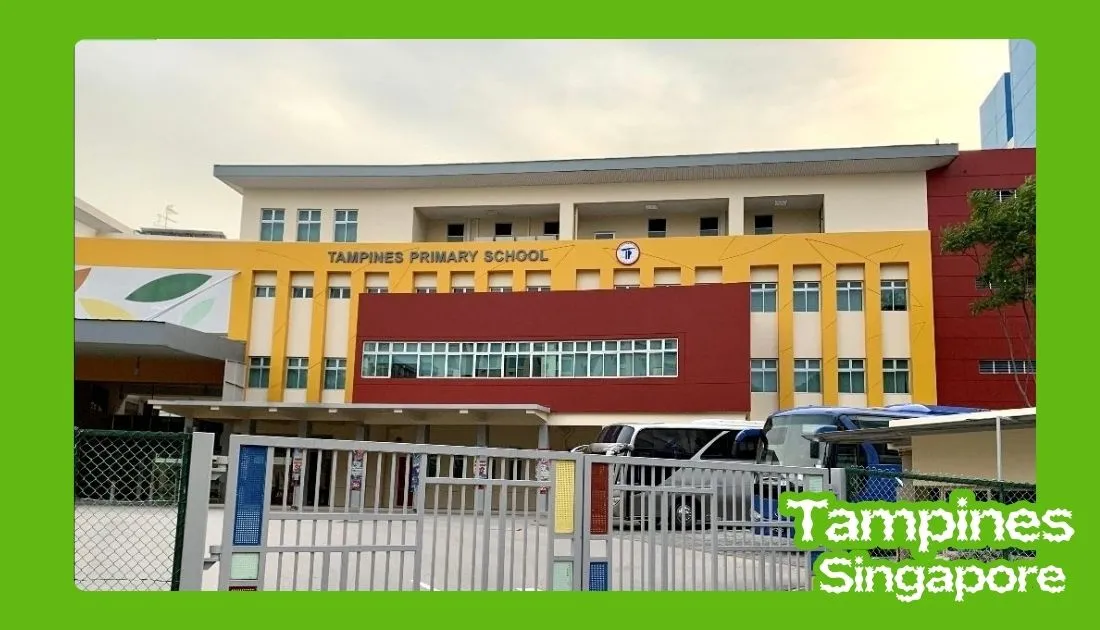
The school environment needs to work for children throughout a full school day, classrooms for academic lessons, spaces for activities, areas for physical education, and places where students can interact with one another. From a parent’s perspective, I’d be particularly interested in facilities such as the library, school hall, science and ICT learning spaces, sports areas, and canteen. I wouldn’t judge a school simply because it has a long list of facilities, though, the more important question is how those spaces are actually used to support students.
The Academic Curriculum
Students follow the Singapore national primary curriculum, English Language, Mathematics, Science (from Primary 3 onwards), Mother Tongue Languages, and other areas of learning. Primary 1 and Primary 2 are particularly important for establishing basic literacy and numeracy skills. As students move into the upper-primary years, the academic workload becomes more demanding. If I were a parent considering the school, I’d look at the full six-year journey rather than focusing only on Primary 6.
How I Look at PSLE Preparation
Students receive Achievement Levels from AL1 to AL8 for each PSLE subject, and the four subject scores are added together to form the overall PSLE score, with lower total scores representing stronger performance. However, I’d be careful about judging a primary school simply from supposed rankings or isolated PSLE figures, MOE does not publish an official ranking of primary schools, so I’d rather look at the academic support available and whether the learning environment suits the child.
Academic Support
As children approach the upper-primary years, additional academic support can become increasingly important. If researching the school for my own child, I’d want to ask directly about current support programmes, enrichment opportunities, and how teachers communicate progress to parents, much more useful than assuming every child will have exactly the same experience.
My Thoughts on Primary 1 Admission
Tampines Primary School participates in the MOE Primary 1 Registration Exercise, with phases involving priority for siblings, children with relevant school or community connections, and applicants under general registration. One thing I’d personally pay very close attention to is home-to-school distance, checking whether home falls within the relevant distance category can matter when balloting is required. I wouldn’t rely on an old article or previous year’s registration outcome, though, I’d always check the current MOE Primary 1 Registration information before applying.
Why Distance Matters
When I look at a primary school, distance isn’t just an admission issue, it’s also a daily-life issue. A child may need to make the same journey to school five days a week for several years. For Tampines families, I’d look at the actual walking and transport route rather than simply checking the distance on a map.
Co-Curricular Activities and Enrichment
CCAs give children an opportunity to develop interests and skills that aren’t necessarily visible through examination results. Sports can teach teamwork and discipline, performing arts can help children become more confident, and clubs and societies can provide opportunities to explore particular interests. I’d personally check the school’s current CCA list before making assumptions, since activities offered can change over time, and I’d consider the child’s personality alongside what’s available.
Student Leadership
Primary school is a good time for children to gradually learn responsibility. Simple responsibilities such as class duties, helping classmates, or participating in student leadership activities can teach children how to communicate, cooperate, and take ownership of tasks. For me, leadership at this age is more about giving children small opportunities to become confident and responsible.
Sports and Physical Education
Children spend a significant amount of time sitting and learning in classrooms, so having regular opportunities for physical activity provides a useful balance. Sports can teach lessons that aren’t always visible on an academic report, teamwork, persistence, following rules, and learning how to handle both success and disappointment.
Arts, Music, and Creative Activities
Art, music, and performing activities give children opportunities to express themselves differently from the way they do in Mathematics, English, or Science lessons. For some children, these may become their favourite part of the school week. I like the idea of a primary school experience where academic development and creative development can exist alongside each other.
Uniform and Daily Routine
The information available describes the usual school uniform and PE attire, along with expectations around neat appearance and appropriate footwear. I’d personally confirm the latest uniform requirements directly with the school, since details such as suppliers and specific requirements can change.
Student Safety and Wellbeing
A child needs to feel comfortable enough to ask questions, make friends, and approach teachers when something is wrong. Schools also have procedures relating to student safety, health, and emergency preparedness. If visiting as a parent, I’d use that opportunity to ask practical questions about student support rather than simply looking at the physical facilities.
Technology and Learning
What matters to me isn’t simply whether a school has computers or digital devices, I’d be more interested in how technology is being used to improve learning without replacing the fundamentals of reading, writing, problem-solving, and face-to-face interaction.
Environmental Learning
Children can learn about sustainability through practical activities such as recycling, reducing waste, gardening, and energy conservation, activities that turn environmental ideas into something children can actually see and participate in.
Parent and School Engagement
Parent-teacher meetings, school communications, workshops, and volunteering opportunities can help families understand what’s happening in school. If considering this school, I’d want to understand how it communicates with parents and what opportunities exist for parents to participate in the wider school community.
What I Would Look at Before Choosing the School
- The distance from home
- The Primary 1 registration phase that applies
- Current registration vacancies and balloting information
- The school’s academic approach
- Current CCA choices
- Student care arrangements
- School facilities
- Transport options
- Parent-school communication
- The overall environment and culture
Questions I Would Ask Before Applying
What is the current Primary 1 registration process for the upcoming intake? What CCAs are currently available to students? What student-care options are available after school? How does the school support students who need additional academic help? What enrichment programmes are currently offered? How does the school communicate with parents? What are the current uniform and PE requirements? What transport options are convenient from my home?
A Note on How I Put This Together
The founding year, founding numbers, official opening date and the person who opened it, the real motto and vision, and the alumni network launch date are all confirmed directly through the school’s own official history page. I’ve replaced the vague “established to serve the growing population” language from earlier drafts with this specific, verifiable history, and corrected the generic values list with the school’s actual stated motto and mission.
My Final Take
After looking at Tampines Primary School from a parent’s perspective, I think the most useful way to understand it is as a neighbourhood primary school with a genuinely traceable four-decade history, not simply a generic “established to serve growing demand” description. Admission requirements, home distance, and registration phases are obviously important, but they’re only part of the decision. I’d also look at the child’s academic needs, personality, interests, preferred activities, daily commute, and the type of school environment in which they’re likely to feel comfortable. If considering the school for a child, I’d use the information here as a starting point and then verify the latest admission requirements, school programmes, CCAs, and facilities directly with the school and MOE before making a final decision.