

Tampines Town Council | What It Handles for Tampines Residents
When I first started exploring Tampines more closely, I quickly realised there’s much more to understanding this town than its malls, MRT station, food spots, and residential neighbourhoods. The everyday, less visible side of Tampines matters just as much, especially for people who actually live here — and that’s where Tampines Town Council caught my attention.
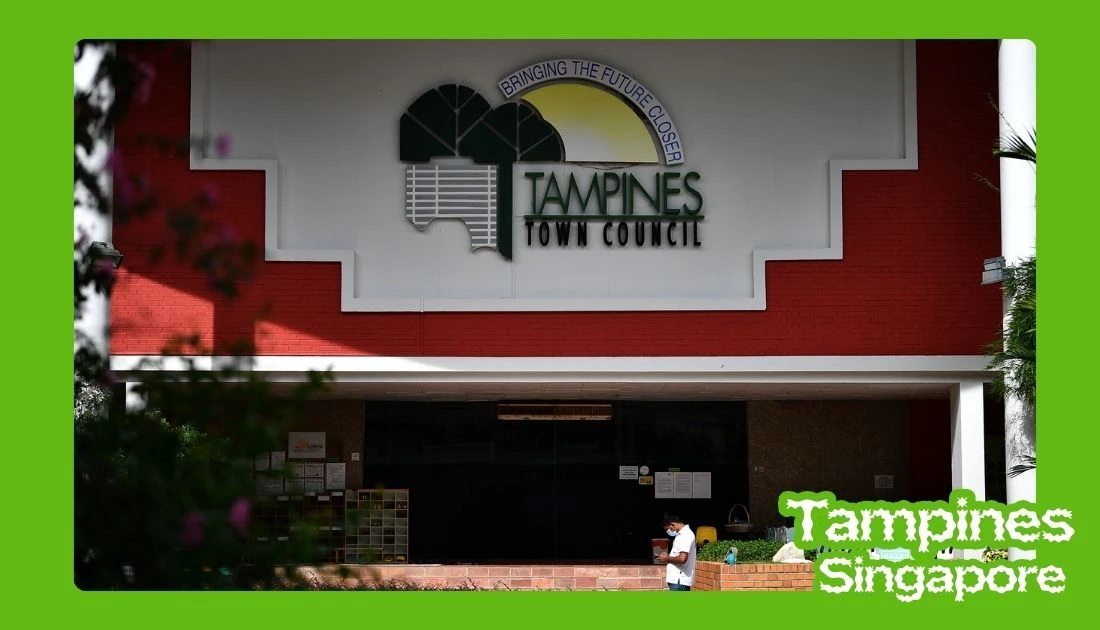
Tampines Town Council (TTC) is the local authority responsible for managing and maintaining public housing estates in Tampines. Established under the Town Councils Act, it oversees the day-to-day estate management of HDB flats within its jurisdiction — corridors, lifts, void decks, car parks, and landscaped spaces kept clean, safe, and functional. I think this is one of those organisations residents may not think about often, until something needs repairing, cleaning, reporting, or arranging.
- Address: 136 Tampines St. 11, Singapore 521136
- Opening Hours:
Monday 8 am–5 pm Tuesday 8 am–5 pm Wednesday 8 am–5 pm Thursday 8 am–5 pm Friday 8 am–4:30 pm Saturday Closed Sunday Closed
If you need to visit for an estate-related matter, I’d plan around these weekday hours rather than assuming the office operates like a shopping-centre service counter.
What Tampines Town Council Actually Does
One thing that stood out to me while researching this is just how much of residential life depends on services that are easy to overlook. When I walk through a neighbourhood, I naturally notice the obvious things first — shops, cafés, playgrounds, MRT connections, the condition of the buildings. But behind all of that, regular maintenance is happening in the background, and Tampines Town Council manages the common property that makes it possible: corridors, lifts, void decks, car parks, landscaped areas, and other shared facilities.
For me, this makes the town council less of a purely administrative office and more of a practical part of everyday neighbourhood life. Residents may not need to contact TTC every week, or even every year, but when there’s a problem with a shared facility, a maintenance concern, bulky items to remove, a payment issue, or a general question about estate services, knowing where to go can save a lot of guesswork.
Purpose and Functions of the Town Council
The main purpose of Tampines Town Council is to manage and maintain common property within the HDB estates under its jurisdiction, and that covers a surprisingly broad range of work — cleaning, lift maintenance, landscaping, pest control, repairs, and general upkeep of shared facilities, all aimed at keeping residential areas functional and pleasant to live in. Residents interested in how the area is politically represented can also look into the electoral division covering Tampines, since the GRC framework connects to how estates here are organised.
Another key function is the financial management of Service & Conservancy Charges (S&CC), which fund estate upkeep — the council prepares budgets, awards maintenance contracts, and oversees how public funds are spent. I also found the upgrading side interesting, since estate management isn’t only about fixing something after it breaks: projects like repainting, lift replacement programmes, and barrier-free access improvements are all part of the picture, aimed at improving the longer-term condition and accessibility of the estate. The council also handles resident feedback, estate disputes, and appeals related to payments or maintenance concerns.
In practical terms, I think of TTC as one of the main points of contact when a problem involves shared or common property, rather than something entirely inside a private home.
Areas and HDB Estates Under Tampines Town Council

Tampines is one of Singapore’s major residential towns, so the scale of estate management here is considerable. TTC manages HDB estates within the Tampines Group Representation Constituency, covering residential blocks and all the shared spaces around them — multi-storey car parks, playgrounds, fitness corners, community spaces, sheltered walkways, drainage systems, landscaped gardens, and other common property. There are also commercial spaces within HDB blocks, like shops and coffee shops, where the common property tied to the estate falls under the same management scope — this even extends to private developments nearby, such as a modern executive condominium that sits within the estate management landscape too.
What I find useful to remember is that an HDB estate isn’t just the individual flat itself — there’s a large shared environment around every block that needs continuous maintenance. The town is also divided into different zones for supervision, which helps organise maintenance schedules across the wider Tampines area.
Estate Maintenance and Management Services
Estate maintenance is probably the part of TTC’s work that residents notice most directly. Regular inspections and repairs keep shared facilities working — electrical systems, plumbing, lifts, and building structures are all part of this. I particularly appreciate the distinction between routine maintenance and resident-reported problems: some issues get caught during scheduled inspections, while others are noticed by residents first, and having a channel to report faults gives people a way to flag problems affecting common areas — things like faulty shared facilities, cleanliness issues, plumbing problems in common property, lift-related concerns, safety hazards, structural defects, or landscaping issues. Exact responsibility depends on where the problem occurs, which is worth checking before assuming the town council is responsible for a repair.
Landscaping, Horticulture, Conservancy and Cleaning
The green spaces around Tampines are part of what gives many residential areas their character, so landscaping and horticultural maintenance are an important part of estate management. TTC oversees this work to keep communal areas maintained and attractive, alongside regular cleaning and conservancy services for shared corridors, recreational facilities, and other common areas. Keeping these spaces clean isn’t just about appearance — it also affects hygiene, accessibility, and the general condition of the neighbourhood. These are the kinds of services I might not consciously notice when everything’s working as it should, but if maintenance is neglected, the difference becomes obvious fast.
Town Improvement and Upgrading Works
Another part of TTC’s responsibilities involves improvement and upgrading works — lift upgrades, road resurfacing, improvements to common facilities, safety enhancements, accessibility improvements, and other infrastructure projects. I think these matter particularly in a mature residential town like Tampines, because maintaining an estate long-term involves more than fixing individual problems as they come up. These projects are planned to minimise disruption to residents, though some temporary inconvenience can be part of the process — the intention is to improve the estate’s longer-term functionality and condition.
Cyclical Works
Cyclical works are another area I found useful to understand — rather than waiting for everything to deteriorate before acting, periodic maintenance like repainting, roof inspections, and structural checks can be scheduled in advance. I’d think of cyclical maintenance as the less visible side of estate management: work planned before a major problem develops, rather than a reaction to one.
Estate Management and Resident Support
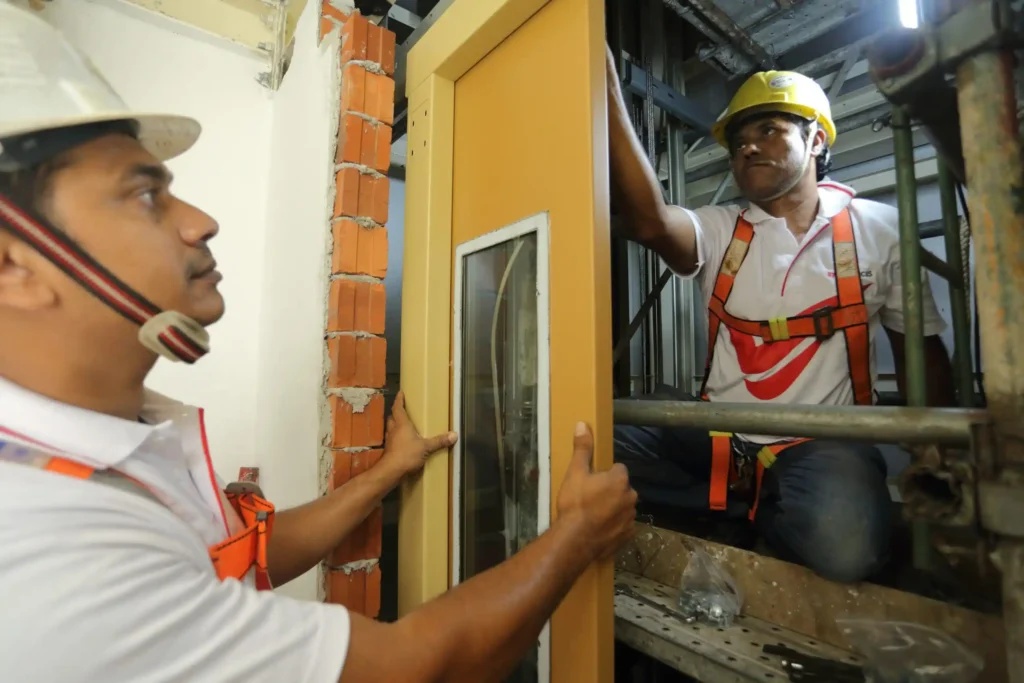
TTC provides a wide range of services relating to estate management and resident requests — cleaning, waste management, lift servicing, pest control, and repairs involving common areas. Residents can also reach out when they need clarification about services and payments. One thing worth keeping in mind: not every problem inside an HDB flat automatically becomes a town council responsibility. The distinction between common property and private property matters, and it becomes especially important when requesting plumbing, handyman, or repair services.
Booking Bulky Item Removal
This is one of the services I think residents are most likely to need at some point. Large household items can become difficult to manage when moving house, replacing furniture, or clearing out a flat — old furniture, mattresses, and appliances may need a proper removal arrangement rather than just being left out. Residents can arrange bulky item removal through the council’s available channels, including phone, email, or an online request process. When making a request, you’d typically need to provide the block number, unit number, type of items, quantity, and a preferred collection date. I’d arrange this in advance rather than leaving large items in a corridor or communal area and expecting automatic collection.
Scheduling and Collection
Once a request is confirmed, a collection date and time gets arranged, and residents need to follow instructions about where the items should be placed — usually near the block entrance or another communal service area the collection team can access. Standard bulky-item services may also have limits on how many items a household can dispose of within a given period, so it’s worth planning ahead if you’re clearing several large items at once. I’d also avoid placing bulky furniture or appliances in a corridor or lift lobby where they could obstruct other residents.
Items That May Not Be Accepted
Not everything qualifies for standard bulky-item collection — chemicals, paint, flammable materials, renovation debris, tiles, cement, and broken renovation fixtures are generally excluded. For these, residents may need separate disposal arrangements, potentially through licensed contractors or specialised waste services. Worth checking this before putting something out, since a non-compliant item may simply be rejected.
Why Proper Bulky-Item Disposal Matters
I see this as one of those small household responsibilities that can have a surprisingly large effect on a shared neighbourhood. A discarded mattress or piece of furniture left in the wrong place can block access, create a safety issue, or make a common area harder to use. Proper collection keeps shared spaces clear and makes it easier for other residents, cleaners, and maintenance workers to move around the estate — and it supports a more organised disposal and recycling process too.
Plumbing and Handyman Services

This is another area where understanding responsibility really matters. The town council generally manages common property, while problems entirely inside an individual flat are usually the homeowner’s responsibility — though residents may be able to get referrals or assistance for approved contractors depending on the issue. Examples include clearing a choked pipe, repairing leaks in shared areas, fixing door closers, or addressing minor structural defects in corridors. Cost varies depending on the type of work and urgency. If I were dealing with a repair, my first step would be establishing whether the problem is common property or private property — that alone can prevent a lot of unnecessary confusion about who arranges the work and who pays for it.
Service and Conservancy Charges
Service & Conservancy Charges, commonly called S&CC, are collected monthly and go toward estate maintenance — cleaning, landscaping, and communal facility management. Payment options include GIRO, online banking, AXS payment machines, and authorised payment counters. GIRO can be convenient since payment is deducted automatically each month, reducing the chance of forgetting. For anyone who prefers to manage payments manually, the online and machine-based options provide alternatives.
GIRO and Financial Assistance
Financial assistance options are also available for residents experiencing payment difficulties, potentially including instalment plans, deferred payments, or other assistance schemes. I think this is worth knowing, because an S&CC payment problem is better addressed through communication with the relevant office than simply left unresolved. If someone’s struggling to keep up, I’d contact the council directly and ask what arrangements are available rather than assuming there’s no flexibility.
Other Resident Services
TTC’s resident-facing work extends beyond maintenance — appeals relating to late-payment penalties, property-related complaints, feedback about cleanliness or safety concerns, estate improvement suggestions, facility bookings where applicable, and coordination with other agencies. That last point matters, since not every neighbourhood issue falls under the town council’s jurisdiction — sometimes the right agency is different, and the council can help point residents toward the correct channel.
Tender and Career Opportunities
Town councils need contractors and service providers for a wide range of work — cleaning, landscaping, lift servicing, maintenance, construction, and upgrading projects. Tender announcements give businesses the opportunity to bid on these contracts, typically including project specifications, submission deadlines, and evaluation criteria, with results announced publicly after evaluation.
Career opportunities may also arise within the council’s administrative and operational environment, or through managing agents, spanning roles in estate management, customer service, administration, finance, operations, and community services. Managing-agent tenders are another part of the system, involving the appointment of professional firms to help oversee day-to-day operations. If you’re looking for employment or business opportunities connected to estate management in Tampines, I’d check the relevant official channels rather than relying on older listings.
Social Media and Community Updates
Worth keeping in mind: town council information isn’t limited to the physical office. TTC uses official communication channels to share updates on estate works, maintenance schedules, payment reminders, pest-control activities, community events, emergency advisories, and other neighbourhood notices. Feedback and appeals can also be submitted through email, hotline, or online forms. Following the council’s official updates can be genuinely useful when maintenance or upgrading works are happening around your block.
How to Get to Tampines Town Council
The office sits within Tampines town centre and is accessible via Tampines MRT station and nearby bus interchange services. For me, public transport would be the first option I’d consider when visiting an office in the town centre, particularly during busy periods — visitors can also follow local signage on approach. Since transport arrangements and access details can change, I’d check the latest official directions before making a specific trip.
Parking Facilities
For anyone driving, nearby HDB car parks and commercial-building parking may offer options around the town centre, with short-term visitor parking sometimes available depending on location. Parking charges and restrictions follow the relevant operator’s rules, so I’d check the signage at the time rather than relying on an old rate found online. Accessible parking spaces are also available in the area for persons with disabilities, subject to the applicable regulations.
What I’d Prepare Before Contacting Tampines Town Council
If I were contacting TTC about an estate issue, I’d prepare the details beforehand: block number, unit number (where relevant), a clear description of the problem, its location, whether it affects common or private property, relevant dates or timings, and details of any previous report if applicable. For bulky-item collection, I’d also have the type and quantity of items ready before booking. It makes the conversation much easier and cuts down on having to repeat information.
Frequently Asked Questions
How do I contact Tampines Town Council?
Through its official hotline, email, or by visiting the office at 136 Tampines Street 11, Singapore 521136 during operating hours.
How do I dispose of bulky items?
Book a bulky-item removal through the council’s booking channels — phone, email, or online — providing the block, unit, item type, quantity, and preferred collection date in advance.
What are Service & Conservancy Charges?
Monthly charges that fund estate maintenance and management, with the exact amount varying by flat type.
How can I pay S&CC?
Via GIRO, online banking, AXS payment machines, or authorised payment counters — GIRO is useful for automatic monthly deduction.
What if I’m having difficulty paying S&CC?
Assistance arrangements, such as instalment or deferred-payment plans, may be available — it’s best to contact the council directly to find out what applies to your situation.
How do I request handyman or plumbing assistance?
First determine whether the issue involves common property or private property. Common-area issues go to the town council or managing agent; private in-unit repairs are generally the homeowner’s responsibility.
Where is Tampines Town Council located, and what are its operating hours?
136 Tampines Street 11, Singapore 521136. Monday to Thursday, 8:00 am–5:00 pm; Friday, 8:00 am–4:30 pm; closed Saturday and Sunday.
My Final Thoughts
When I first approached Tampines as a visitor, I naturally focused on the places that are easiest to talk about — shopping malls, restaurants, markets, transport, things to do. But the longer I spent looking at how Tampines works as a residential town, the more I realised the less visible services matter just as much.
Tampines Town Council is part of that everyday infrastructure. The cleaning of shared spaces, maintenance of lifts, landscaping, repairs, upgrading projects, bulky-item collection, conservancy payments, and resident feedback systems aren’t the things that draw visitors to Tampines, but they directly affect the people who live here. What I find particularly useful is knowing which types of problems the town council deals with and which fall under private property responsibility — that distinction alone can save residents a lot of time.
My main takeaway: if you live in a Tampines HDB estate and have an issue involving shared facilities, estate maintenance, bulky-item disposal, S&CC, or another neighbourhood-related matter, Tampines Town Council is one of the key places to start. And because operating arrangements, payment options, and procedures can change, I’d always check the latest official information before relying on older details from a guide like this.