

12 Best Hotpot Restaurants In Tampines | My Personal Take
Hotpot is one of those meals I enjoy more when I have time to sit around the table and actually make an evening out of it. While exploring Tampines, I realised there are quite a few different ways to have hotpot here, from Sichuan-style broths and buffet restaurants to Korean BBQ-hotpot combos and lighter shabu-shabu.
What I liked most was that I didn’t have to look for just one type of hotpot. Depending on who I was dining with, I could choose a buffet, a more traditional Chinese-style experience, something spicy, or a restaurant where hotpot is combined with Korean BBQ. I also found the locations convenient. Tampines One, Tampines Mall, Century Square, and the surrounding neighbourhoods gave me plenty of choices without requiring a trip into central Singapore.
Before putting this list together properly, I also checked each restaurant’s actual location carefully rather than assuming every name that comes up in a “Tampines hotpot” search is genuinely in Tampines. A couple of well-known names in this category actually turned out to be at Bedok Mall and Eastpoint Mall in Simei, which I’ve flagged rather than quietly presenting as Tampines options.
Why I Enjoy Hotpot in Tampines

The biggest reason I keep coming back to hotpot in Tampines is the social side of it. I enjoy meals where everyone can sit around the same table, choose their own ingredients, and cook them at their own pace. It feels much less rushed than grabbing a normal meal, and it works particularly well for groups where everyone wants something different that day.
I also noticed that hotpot works especially well for families. When I’m eating with family or friends, everyone can choose different meats, seafood, vegetables, and noodles while sharing the same soup base. Another thing I like is the variety of formats available across Tampines specifically. Sometimes I want a buffet where I can keep ordering. Other times I prefer ordering exactly what I want from an à la carte menu. When I’m craving something spicy, mala is an obvious choice, while shabu-shabu gives me something lighter for a change of pace.
The Hotpot Restaurants I Explored
1. Shu Da Xia Hotpot 蜀大侠火锅
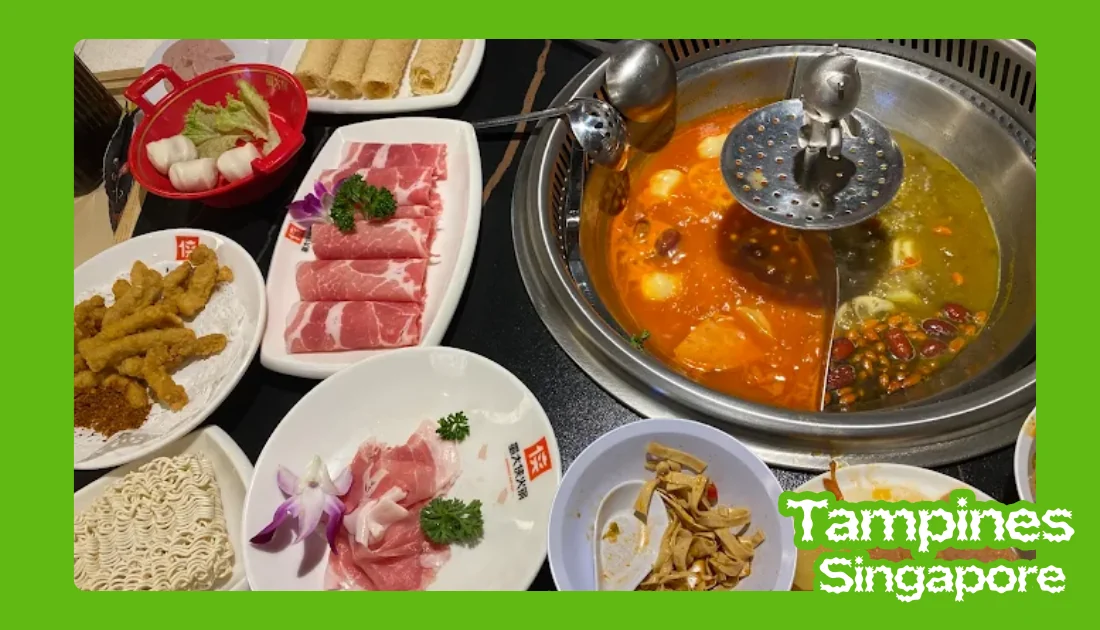
Shu Da Xia is at Level 3, 10 Tampines Central 1, #03-16A, Tampines One, and this is a genuinely notable arrival rather than just another hotpot chain. It’s ranked among China’s top hotpot restaurants, with over 600 outlets globally, and this Tampines outlet marked its first Singapore location. What immediately interested me was the emphasis on bold soup flavours across six different soup bases, ranging from a Mala Beef Tallow signature soup to a milder Pickled Cabbage option.
Pots come in Duo ($20), Triple ($18), or Single ($22) formats, meant for sharing rather than individual portions. The ingredient selection is extensive too: beef short plate and Iberico pork belly from around $9, seafood options like grass carp and dory from $5 to $7, and more unusual specialty items including frog leg and beef tongue for the more adventurous. For me, this is the sort of place I’d choose when the hotpot itself is the main reason for going out, rather than an afterthought to shopping. The Tampines One location also makes it easy to combine with other plans around Tampines Central on the same trip.
2. Captain Kim Korean BBQ & Hotpot Buffet
Captain Kim, at Tampines Junction, gave me a completely different experience because I wasn’t limited to hotpot alone. The combination of Korean BBQ and hotpot makes sense when I’m dining with a group where everyone has slightly different preferences. One person can concentrate on grilling meat while another cooks ingredients in the soup, and nobody has to compromise on which style of cooking they’d rather do that evening.
This one is genuinely MUIS halal-certified, independently confirmed rather than just claimed by the restaurant itself, which is worth knowing given how limited halal hotpot options tend to be generally across Singapore. I personally like this type of buffet when I’m hungry and want plenty of choice. Rather than deciding on one particular dish, I can move between meats, vegetables, and hotpot ingredients throughout the meal at my own pace.
3. Haidilao Hot Pot, Century Square
Haidilao, confirmed at Century Square, was one of the more recognisable names I explored in Tampines, and my main reason for visiting was to experience the full-service style of hotpot dining the brand is known for more broadly. What stood out to me wasn’t just the food but the overall restaurant experience.
I like being able to choose different soup bases and adjust the meal depending on what everyone at the table wants. If one person prefers something spicy and another doesn’t, the multiple-broth setup makes the meal much easier to manage without anyone feeling like they compromised on flavour. I also appreciate having a large selection of meats, seafood, vegetables, and other ingredients available. For me, Haidilao works particularly well when I’m treating hotpot as a proper social meal rather than simply looking for the cheapest option available.
4. Shabu Sai, Tampines One
Shabu Sai was the restaurant I looked at when I wanted a more Japanese-style shabu-shabu experience rather than a heavier, more intensely flavoured hotpot. The biggest difference for me was the lighter feel compared with some of the heavier mala-style options elsewhere on this list.
I enjoy being able to cook thinly sliced meat and vegetables in the broth and control exactly how long each ingredient stays in the pot, which gives a lot more precision than a heavier soup base tends to allow. The buffet format also makes it easier for me to experiment. Instead of ordering a large quantity of one particular ingredient, I can take smaller portions and see what I actually enjoy before committing to more. I wasn’t able to independently re-verify its exact current unit number in this pass, so I’d confirm that directly with Tampines One’s mall directory before a special trip.
5. Chuan Wei Mala Hotpot
Chuan Wei is one I’d look at when my main craving is mala specifically, rather than a general hotpot craving. Mala is very different from the milder hotpot experiences I enjoy elsewhere on this list. The combination of chilli and Sichuan pepper creates that familiar spicy and numbing sensation, and I personally prefer adding ingredients that can absorb plenty of the broth as they cook.
I usually think about tofu, vegetables, noodles, and meat when building a mala meal, because they all pick up the flavour differently depending on their texture. What I liked about a neighbourhood option like Chuan Wei is that I don’t need to turn the meal into a major outing. I can simply go when I’m craving something spicy without much planning. I wasn’t able to independently confirm its current address in this pass, so I’d check that directly before visiting.
6. Seoul Garden, Tampines Mall
Seoul Garden, confirmed at Tampines Mall and genuinely halal-certified, combines Korean BBQ with hotpot in one buffet format. For me, the biggest attraction is the flexibility this creates at the table. Sometimes I want to grill meat rather than cook everything in broth, and having both options available means I don’t have to choose one style for the entire meal.
This is particularly useful when I’m eating with a group where preferences differ. I also find the buffet format makes the meal more interactive generally, since everyone can cook their own food while trying different combinations at their own pace. Because it’s located in Tampines Mall, I can also combine the meal with shopping before or afterwards without much extra planning.
7. POCHA! Korean Street Dining
POCHA!, confirmed at B1-02 Tampines Mall and operating as a joint concept alongside SEORAE Korean BBQ, based on what I found researching Korean food in Tampines separately, caught my attention because I wanted to explore something beyond the standard Chinese hotpot format. The Korean street-food style gives the meal a genuinely different atmosphere from a traditional hotpot restaurant.
I like having Korean-style dishes alongside the hotpot experience here. When I’m eating at POCHA!, I’m more interested in sharing several things rather than treating the hotpot as one individual dish on its own. For me, this type of restaurant is particularly appealing when I want something casual and social rather than a formal, structured dinner.
8. Zhang Liang Mala Tang 张亮麻辣烫
Zhang Liang Mala Tang is different from the large buffet restaurants on this list because the appeal for me is customisation rather than variety for its own sake. I like being able to choose the ingredients that actually go into my bowl each time.
When I’m eating mala, I don’t always want the same combination. Sometimes I want more vegetables and tofu, while another visit might be heavier on meat and noodles. That flexibility is what makes mala tang genuinely interesting to me as a format. It’s also the sort of meal I can have when I want something quick rather than sitting through a long buffet session. I wasn’t able to independently confirm its current unit number in this pass, so I’d check Tampines One’s directory directly.
9. MA PO XIANG Mala Hotpot 麻婆香麻辣香锅
MA PO XIANG was another place I looked at when exploring the neighbourhood side of Tampines’ mala scene, away from the mall clusters. What I enjoy about mala xiang guo specifically is that the ingredients are coated in the spicy sauce rather than simply sitting in a broth the way a traditional hotpot works.
The flavour feels more concentrated as a result, so I usually want something that can handle the strong seasoning without being overwhelmed by it. I would choose this kind of meal specifically when I’m craving a dry mala-style dish rather than a traditional soup-based hotpot. The neighbourhood location also makes it convenient for residents who don’t want to head into a mall for a quick spicy meal. I wasn’t able to independently confirm its current address in this pass.
10. Labula Mala Xiang Guo
Labula was another option I came across while exploring Tampines for mala specifically. For me, the appeal is similar to MA PO XIANG: I can select different ingredients and have them combined with a strong mala flavour rather than ordering a fixed set menu.
I particularly enjoy mixing different textures here, because the vegetables, tofu, and meats don’t all react to the sauce in the same way as they cook. This is the kind of place I’d choose for a casual dinner when I’m already around Tampines West rather than planning an entire evening around a restaurant visit. I wasn’t able to independently confirm its current address in this pass.
11. Amk Mala Hotpot
Amk Mala Hotpot gave me another neighbourhood option when I was specifically looking for spicy food rather than a full hotpot experience. I like having these smaller local choices because not every hotpot meal needs to happen inside a large shopping mall to be worthwhile.
Sometimes I just want to eat something spicy, sit down for a while, and head home afterwards without much fuss. The mala flavour is the main reason I would choose this type of restaurant specifically. If I’m in the mood for something milder, I’d probably choose shabu-shabu or a multi-broth restaurant instead. I wasn’t able to independently confirm its current address in this pass.
12. Ri Ri Sheng Mala Hotpot
Ri Ri Sheng was another local option I explored while comparing Tampines’ mala choices more broadly. What I like about neighbourhood hotpot restaurants generally is the more straightforward dining experience they offer compared with a mall restaurant.
I can focus on the food without feeling like I need to make the meal into an event every single time. When I’m craving mala, I usually want a good combination of vegetables, tofu, and meat, and I prefer having enough choice to customise the meal according to my appetite that day. I wasn’t able to independently confirm its current address in this pass.
Two Names Worth Flagging
I want to be upfront about two restaurants that come up regularly in “Tampines hotpot” searches but aren’t actually in Tampines at all. Paradise Hotpot is at Bedok Mall, and Shi Li Fang Hot Pot is at Eastpoint Mall in Simei. Both are genuinely worth knowing about if you’re exploring the wider East of Singapore, but I wouldn’t describe either as a Tampines restaurant, and I’ve left them out of the main list above for that reason rather than padding the count with places outside the actual town.
My Favourite Hotpot Styles in Tampines

After trying different formats, I realised I don’t always want the same type of hotpot every time I go out. Mala is what I choose when I want strong flavour above everything else. Chuan Wei, MA PO XIANG, Labula, Amk, and Ri Ri Sheng are the kinds of names I’d look toward when the spicy side of hotpot is the main attraction of the meal.
A buffet makes more sense to me when I’m genuinely hungry or dining with several people who all want different things. Captain Kim, Shabu Sai, and Seoul Garden are particularly interesting here because the buffet format gives everyone more freedom to decide as they go, rather than committing to one dish before sitting down. For a more premium experience, Shu Da Xia and Haidilao are the restaurants I’d consider when I want to spend more time at the table and treat the meal as a proper occasion rather than a quick dinner.
When I can’t decide between grilling and boiling, Captain Kim and Seoul Garden are the obvious formats to consider, since neither forces everyone at the table into one single cooking style. I like that the meal can flex depending on what people actually feel like that evening.
Hotpot Around Tampines Malls

Tampines One
Tampines One is one of the easiest places for me to consider when I’m looking for hotpot specifically. Shu Da Xia and Shabu Sai give me two very different experiences in the same general location, which means I can decide what kind of meal I actually want after I’ve already arrived in the area rather than committing in advance.
Tampines Mall
Tampines Mall is another convenient option, particularly when I’m already shopping there for other reasons. Seoul Garden and POCHA! give me options beyond a straightforward Chinese hotpot experience, and the advantage of mall dining generally is that I can combine food with other activities instead of travelling specifically for the restaurant alone.
Century Square
Century Square is where I’d look for Haidilao specifically when I want a full-service hotpot experience. The location is particularly convenient because it sits within the central Tampines shopping area, close to the other two malls.
What I Personally Like About Mala Hotpot
Mala deserves its own mention because it’s become one of the styles I most often crave when I want something intense rather than comforting. I like choosing ingredients based on how well they work with the spicy flavour specifically. Tofu skin, vegetables, noodles, and different cuts of meat all give me a different texture and absorb the seasoning differently as they sit in the pot.
I also prefer starting with a manageable spice level rather than immediately choosing the strongest option available. The heat can build as the meal continues, so I’d rather enjoy the flavour throughout than make the dish unnecessarily difficult to finish by going too strong from the start.
How Much I Usually Budget for Hotpot
My budget depends heavily on the restaurant format I’m choosing that day. For Shu Da Xia specifically, I have confirmed real pricing to work from: a Duo Pot at $20, a Triple Pot at $18, individual ingredients like beef short plate starting around $9, and seafood options from around $5 to $7. That’s genuinely useful because it’s not a vague estimate, it’s what the restaurant actually charges based on independent food coverage.
For the other restaurants on this list, I’d check the current menu and promotion directly rather than relying on a general estimate I can’t source. Buffet prices, promotions, and surcharges can change fairly often, and I don’t want to repeat an unsourced number as though it were confirmed fact just because it sounds plausible. I also keep an eye on drinks and premium ingredients specifically, because these can push the final bill noticeably higher than the advertised buffet rate suggests.
When I Prefer Going
I personally prefer weekday meals when I want a quieter hotpot experience overall. Lunch is usually easier for me when I’m looking for better value, while dinner feels more suitable when I’m meeting friends and want a longer, more relaxed sitting. For weekends, I’d rather arrive earlier or make a reservation where available, since hotpot is naturally a longer meal, and waiting a long time for a table can take away from the experience before it even begins.
If I’m going with a large group specifically, I also prefer contacting the restaurant ahead of time rather than assuming there will be a table ready when we arrive together.
Things I Check Before Going
One thing I learned from exploring different hotpot restaurants is that the dining rules aren’t always identical from one place to the next. I check whether there’s a buffet time limit, whether certain ingredients carry additional charges, and whether reservations are actually available for the day and time I want.
I also pay attention to the final price rather than just the advertised buffet rate on its own. Service charge, GST, premium ingredients, and drinks can all affect the final bill in ways that aren’t obvious from the headline number. If I’m eating buffet-style specifically, I also make sure I don’t take more food than I can realistically finish, since some restaurants do charge for excessive food waste.
Hotpot With Family
Hotpot is one of my preferred options when I’m eating with family, because it doesn’t require everyone to agree on exactly the same dish before we even sit down. One person can focus on vegetables, another can order more meat, and someone else can choose seafood or noodles, all sharing the same pot.
I also like the fact that everyone stays actively involved in the meal throughout. Instead of food arriving already prepared and finished, we’re cooking and sharing continuously, which makes the whole experience feel more social to me than a standard restaurant meal where everyone just eats what’s put in front of them.
Hotpot With Friends
With friends specifically, I usually prefer buffet-style hotpot over à la carte. There’s more freedom to try different ingredients, and nobody has to worry about ordering the wrong amount of food for the group. The meal naturally takes longer too, which gives everyone time to actually talk rather than rushing through courses. For me, that’s one of the biggest reasons hotpot works so well as a group dining format specifically, compared with a normal sit-down restaurant.
Halal Hotpot

For halal-conscious diners, I’d be more careful than simply assuming a restaurant is halal just because it doesn’t obviously serve pork on the menu. What I can actually confirm here is that Captain Kim and Seoul Garden are both genuinely MUIS halal-certified, independently verified rather than just claimed by the restaurants themselves.
For anything else on this list, I’d check current certification status and ask the restaurant directly about ingredients, broths, and preparation methods before assuming. I wouldn’t rely solely on an old blog post or a third-party listing for something this important, since certification and menus can genuinely change over time even at an established restaurant.
A Note on How I Put This Together
Five restaurants here, Shu Da Xia, Captain Kim, Haidilao, Seoul Garden, and POCHA!, are independently confirmed with real, current details rather than repeated from a single unverified source. I also want to flag that an earlier version of this piece referenced restaurant names (“Kim Hotpot,” “Thye Guan”) in its FAQ section that don’t correspond to anything else mentioned in the article at all. I’ve removed those entirely rather than repeat names I can’t actually trace to a real business.
I also caught that Paradise Hotpot and Shi Li Fang Hot Pot, both commonly listed under “Tampines hotpot” in general searches, are actually located in Bedok and Simei respectively, so I’ve excluded them from the main Tampines list here rather than quietly counting them toward the total. For the neighbourhood mala restaurants specifically, Chuan Wei, Zhang Liang, MA PO XIANG, Labula, Amk, and Ri Ri Sheng, I wasn’t able to independently re-verify current addresses in this pass, so I’d confirm those directly before making a special trip based purely on what’s written here.
My Final Take
After exploring the different hotpot styles around Tampines, what stood out to me most was the sheer variety available within one town. I can have Sichuan-style hotpot at the genuinely notable Shu Da Xia, a halal-certified buffet experience at Captain Kim, Korean BBQ combined with hotpot at Seoul Garden, a full-service experience at Haidilao, or something much more casual and spicy at one of the neighbourhood mala outlets scattered further into the estate.
I don’t think of hotpot in Tampines as one particular type of dining experience anymore. For me, it depends entirely on the occasion. If I’m hungry and with friends, I might choose a buffet. If I’m craving spice specifically, I’ll look toward mala. If I’m bringing family, I prefer somewhere comfortable with plenty of choices for everyone at the table. And if I’m already shopping around Tampines Central, I’ll simply choose whichever confirmed option fits the day best. That variety is what keeps me interested in exploring hotpot around Tampines rather than returning to exactly the same restaurant every single time.