

Tampines Secondary School | What I Noticed About the Campus & Academics
I wanted to take a closer look at Tampines Secondary School because it’s one of the established secondary schools in the Tampines area, and I was interested in understanding what the school and its surroundings are actually like rather than simply looking at its name on a map. The school is at 252 Tampines Street 12, Singapore 529427, with a general office open 7:30am to 5:30pm, Monday to Friday, excluding public holidays.
My First Impression
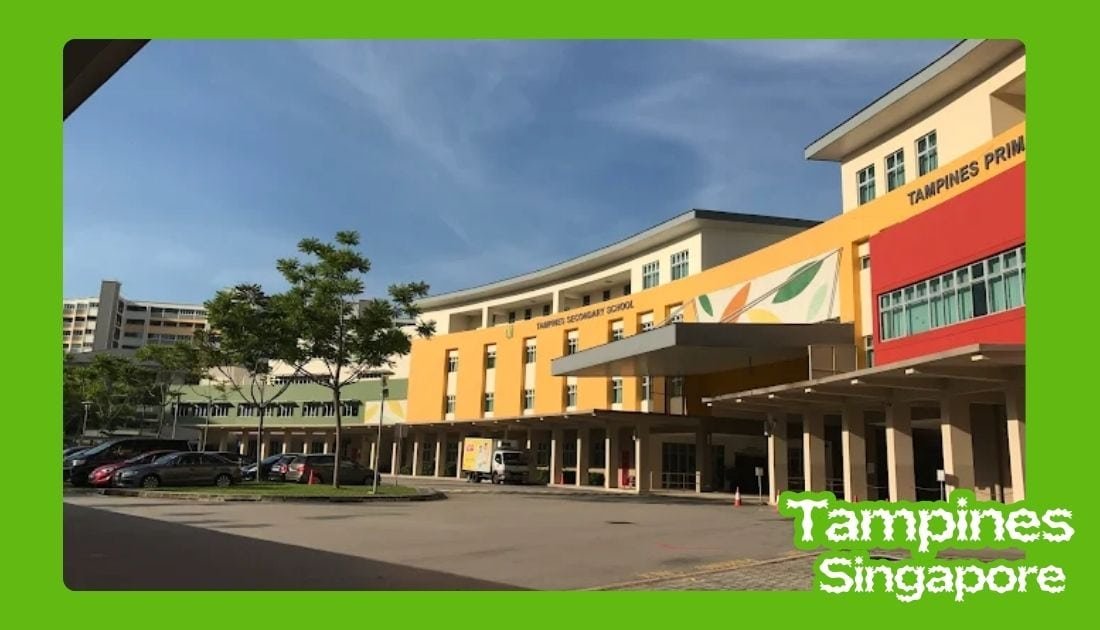
My first impression was that this is an established neighbourhood secondary school rather than one located within a major commercial complex. The address places the school within the residential fabric of Tampines, which makes the location particularly practical for families living nearby. One detail worth knowing: the school shares its physical campus with Tampines Primary School, even though the two aren’t formally affiliated, so if you’re researching either school, it’s worth being clear about which one you’re actually looking into.
A Real Look at the School’s History
The school was founded on 2 January 1986, named after Tampines New Town itself and built as one of the first schools to serve the newly developing community. Its founding principal, Mr. Koh Sei Hian, welcomed the school’s inaugural cohort of 458 students alongside 12 teachers. What I found genuinely interesting is that the building wasn’t actually ready that first year, classes were initially held at Pasir Ris Secondary School, and the eventual Tampines Street 12 site was used by Tampines Junior College until December 1986. The school was officially opened on 8 August 1988.
The school later went through a full rebuild under the Ministry of Education’s PRIME upgrading programme, moving to a holding site on Bedok South Road in 2008 before returning to Tampines Street 12 in March 2010. That’s a much more specific and accurate history than a vague “founded sometime in the 1980s,” and it explains why the current campus reflects more modern facilities despite the school’s genuinely long history in the area.
What I Noticed About the Educational Approach
From the school’s stated direction, I noticed an emphasis on more than examination results. Academic learning is obviously an important part of secondary school, but the school also places attention on character development, leadership, resilience, and participation beyond the classroom. The school’s motto, “Betterment of Self for Society,” reflects that broader aim, and it’s genuinely the same motto the school has held since its founding rather than something adopted more recently.
The Campus Environment

When I think about a secondary school campus, I look beyond classrooms. A school needs spaces where students can study, participate in practical lessons, take part in sports, perform, interact with teachers, and spend time with classmates. Tampines Secondary School has the types of facilities expected in a modern secondary-school environment, including classrooms, science-related learning spaces, ICT facilities, and areas for co-curricular activities, consistent with the modernisation the school went through during its PRIME rebuild.
Academic Life

Academic performance is naturally one of the first things parents look at when researching a secondary school. In my view, it’s important not to judge a school simply from a single year’s examination results, since school results, admission scores, and subject choices can change over time. The school offers Express and Normal (Academic/Technical) streams, aligned with Singapore’s national curriculum, and provides structured support such as remedial lessons and consultation sessions for students preparing for the GCE O-Level examinations.
Admission and Secondary 1 Posting
Secondary 1 admission in Singapore takes place through the Ministry of Education’s Secondary 1 Posting Exercise. Students make school choices after receiving their PSLE results, and posting depends on the applicable admission criteria, school choices, and available places. I’d check the latest MOE information for the relevant admission year rather than treating an older score as a guaranteed entry requirement.
Cut-Off Points and What I Would Check
The cut-off point is probably one of the most searched topics whenever parents research this school specifically. I’d be careful here, because there isn’t one permanent cut-off score that applies every year. Third-party sources I found show recent PSLE cut-off points for this school in the range of roughly 10 to 20 for Express, 21 to 24 for Normal Academic, and 25 to 28 for Normal Technical, based on figures from a couple of recent years, but I want to be clear that these numbers shift annually and shouldn’t be treated as fixed. The better approach is to look at the latest official MOE information directly, consider the child’s PSLE results, and look at the range of schools being considered rather than anchoring to any single number from an older article, including this one.
Subjects and Learning Opportunities
Students study core areas such as English, Mathematics, Science, Humanities, and Mother Tongue languages, while secondary education also gives students opportunities to explore subjects involving creativity, practical learning, and technology. The school specifically runs an Applied Learning Programme in STEM-Sustainability, focused on creative engineering and interdisciplinary problem-solving, and a Learning for Life Programme in Music and Performing Arts, aimed at character development through visual and performing arts.
Co-Curricular Activities
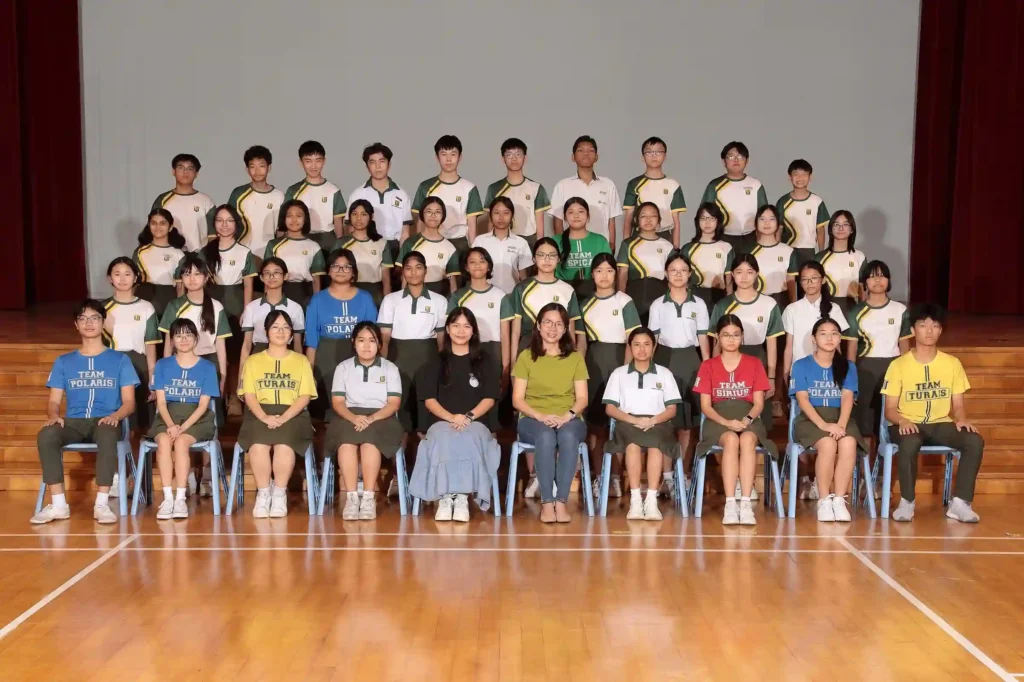
CCAs are one of the areas I’d definitely look at when researching a secondary school. Students spend a considerable amount of time participating in their chosen CCA, so the choice can influence their overall school experience. Confirmed offerings include badminton and basketball for both girls and boys, and netball for girls, alongside performing arts and leadership-focused activities. From my perspective, the important thing isn’t simply the number of CCAs available, it’s whether a particular activity matches the student’s interests and whether the training schedule works alongside their academic commitments.
Sports and Performing Arts
Sports can give students a completely different experience from classroom learning. Activities like basketball, badminton, and other team or individual sports can develop teamwork, discipline, and physical fitness. Performing arts offer another route for students who enjoy music, dance, drama, or performance, and I like seeing these options as part of the wider school experience, since not every student discovers their strongest abilities through academic subjects alone.
Leadership and Student Development
Leadership opportunities were another part of the school’s overall structure that caught my attention. Student leadership can involve responsibilities that require communication, organisation, and teamwork. For a student who enjoys taking responsibility, these opportunities can become an important part of their secondary-school experience, and Values-in-Action projects can help students understand how school learning connects with the wider community.
Uniform, Rules, and Traditions
The school uniform is a practical consideration parents naturally need to understand. Students follow the school’s uniform and grooming requirements, and PE lessons require appropriate sports attire. I’d treat the school’s latest uniform instructions as the definitive source, since vendors, prices, and purchasing arrangements can change from year to year.
School traditions can be difficult to fully understand from an information page alone, since they’re part of the culture students experience over several years. Events such as school assemblies, National Day activities, Sports Day, Speech Day, orientation programmes, and community projects help create a shared identity among students, and the school held its 40th anniversary celebrations in 2026, marking four decades since that first cohort of 458 students.
Getting to Tampines Secondary School
The nearest MRT stations are Tampines (EW2/DT32). Confirmed bus stops serving the school include those near Block 141, Block 101, Block 938, Block 147, UOB Tampines Centre, and opposite Century Square, served by a wide range of bus services connecting to Tampines Bus Interchange. I’d check the specific bus route and walking connection from a student’s actual home rather than simply relying on the general statement that it’s “near Tampines MRT,” since the daily journey matters much more than an occasional visit, and a route that looks short on a map can feel very different when repeated every school day.
What I Would Check Before Applying
If I were researching Tampines Secondary School for a child, I wouldn’t stop after reading one school profile. I’d check the latest information on Secondary 1 admission and posting, current school choices and posting ranges, subject combinations, CCA options and training schedules, school programmes, uniform requirements, transport arrangements, school open-house information, and current MOE policies. I’d also visit the school personally if possible, since a website can describe programmes and facilities, but an actual visit gives a much better sense of the location and surrounding environment.
A Note on How I Put This Together
I want to flag two corrections made against the school’s own official website and other verified sources. The founding year is genuinely 1986, not the vague “early 1980s” in earlier drafts, and the school’s actual opening hours are 7:30am to 5:30pm on weekdays, correcting a garbled set of hours that nonsensically claimed the school was open until or from midnight. I’ve also added real, verified historical detail, the founding principal’s name, the temporary campus arrangement in the school’s first year, and the PRIME rebuild timeline, none of which appeared in earlier drafts of this piece.
My Final Take
After exploring Tampines Secondary School and its surrounding area, what stood out to me most was its connection with the wider Tampines neighbourhood, and a history that’s more specific and interesting than a generic “established as Tampines grew” description suggests. It’s an established secondary school serving the local community, with the expected combination of academic learning, CCAs, student development, and school activities, now nearly four decades old with a genuinely traceable founding story. For anyone researching the school, I’d look beyond just admission scores, the subjects offered, CCA choices, school programmes, daily commute, and overall environment are all useful parts of a much more realistic picture than academic numbers alone.