

My Personal Take Tampines Meridian JC | Campus & Admissions
When I first looked into Tampines Meridian Junior College, what interested me wasn’t only the admission cut-off or the A-Level subject combinations. I wanted to understand what the college actually felt like as a place for students spending two important years there.
TMJC has an interesting background because it brings together the history of Tampines Junior College and Meridian Junior College. The college began operating in January 2019 after the two institutions were merged, and the campus is located at 21 Pasir Ris Street 71.
My First Impression
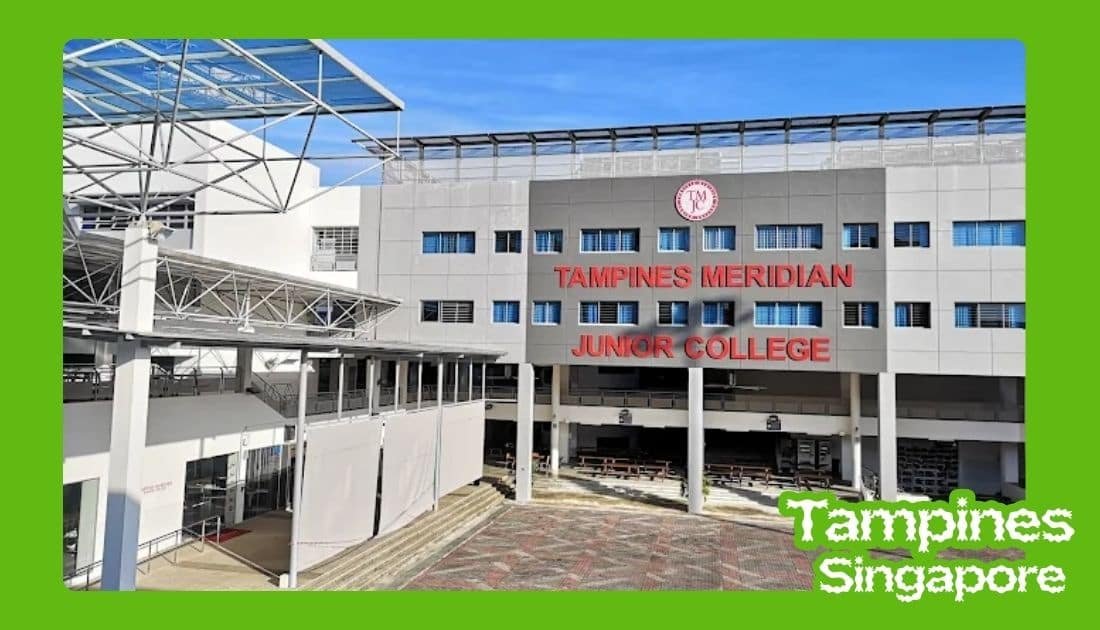
My first impression was that TMJC felt like a proper full-scale junior college campus rather than simply an extension of a secondary school. The campus has dedicated spaces for academic learning, sports, student activities, and co-curricular programmes. I also found the location interesting, although the college carries the Tampines Meridian name, the campus itself is at Pasir Ris Street 71, something worth checking before applying, since the daily journey becomes an important part of JC life.
A Look at TMJC’s History
Tampines Junior College was established in 1986, welcoming its first cohort in April of that year before moving to its permanent campus in December. Meridian Junior College was established later, in 2003, to serve the eastern part of Singapore, its name chosen through a competition. The two colleges were merged in January 2019, with TMJC beginning operations at the former Meridian campus, blending traditions and strengths from both predecessor schools.
What I Noticed About the Campus
The campus has the kind of facilities I’d expect from a junior college supporting both academic and co-curricular activities, classrooms, lecture spaces, laboratories, library facilities, and areas for student activities. One thing I found particularly interesting was the heritage gallery, commemorating the histories of both founding colleges, giving students a sense that the institution didn’t simply start from scratch in 2019.
TMJC Library

Having somewhere comfortable to study outside the classroom is important at this stage. The library supports the academic side of student life, with study spaces catering to different learning styles, quiet zones for focused reading, and group areas for collaborative projects. What I like about having a dedicated library is that students aren’t restricted to studying only in classrooms or at home.
Science and Computer Laboratories
For students taking subjects such as Chemistry, Physics, or Biology, practical work is an important part of understanding the subjects rather than simply memorising information. The computer facilities support students working with technology, research, and digital projects, particularly relevant for students who already know they want to pursue science, technology, or another analytically-minded field.
TMJC Canteen
What I noticed about the canteen is that it functions as a social space as much as a place to eat. Students aren’t only there to eat, it’s naturally somewhere to sit with friends, talk between lessons, and take a break from studying. For me, those small everyday parts of campus life are just as important as the more impressive facilities.
TMJC Admissions
Admission to TMJC is primarily through the Joint Admissions Exercise, or JAE, with students posted based on their O-Level results and the L1R5 aggregate. I found that students shouldn’t think about the cut-off point as a guaranteed admission score for the future, it can change from year to year depending on the students applying and the available places.
TMJC Cut-Off Points, Correctly Presented as a Range
I want to correct something here directly against MOE’s own SchoolFinder page for TMJC. The actual 2025 JAE L1R5 net aggregate was a range, not a single approximate figure: Arts 9 to 13, Science 6 to 12. That’s a meaningfully different, more useful picture than a flattened “around 12 for both streams,” since it shows the genuine spread of students actually admitted, and that Science was, if anything, slightly more competitive than Arts in the most recent published figures rather than the two streams being identical. I’d check the latest official MOE information before applying, since these ranges shift year to year.
Science vs Arts at TMJC
I found it useful to look at the Science and Arts pathways separately rather than treating TMJC as having one single academic route. Students interested in science-related university courses may naturally look at combinations involving Mathematics, Chemistry, Physics, or Biology. Students interested in humanities and social sciences may instead look at subjects such as Economics, History, Geography, or Literature. The important part for me is matching the subject combination with the student’s intended university pathway rather than choosing one simply because it sounds popular.
Subject Combinations at TMJC
TMJC follows the Singapore-Cambridge GCE A-Level curriculum. Students take compulsory components such as General Paper, Project Work, and Mother Tongue Language where applicable, alongside selected content subjects. Confirmed offerings, directly from MOE’s own listing, include Art, Biology, Chemistry, Chinese Language and Literature, Economics, Further Mathematics, Geography, History, Literature in English, Malay Language and Literature, and Mathematics, among others. The exact subject combinations and availability can change, so I’d check the current TMJC subject information rather than relying entirely on an older list.
Direct School Admission to TMJC
DSA-JC can be relevant to students who have developed strengths outside their examination results, sports, performing arts, or leadership. I wouldn’t treat DSA as simply an easier alternative to the normal admission route, students still have to meet the relevant eligibility requirements, and each college has its own selection areas and criteria. For anyone considering DSA, I’d check the current TMJC requirements and application timeline carefully.
TMJC Appeal Process
An appeal may be possible when there are vacancies and the student meets the relevant requirements, but I wouldn’t approach an appeal assuming a place will automatically become available. My advice is to treat an appeal as an additional opportunity rather than something to rely on instead of having alternative choices.
Student Life at TMJC

The academic side of TMJC is only one part of the experience. Student life includes classes, CCAs, house activities, leadership opportunities, and community involvement, and these can become some of the most memorable parts of the two-year experience. I particularly like the idea of students working with people outside their immediate class, helping build friendships and experience working as part of larger teams.
CCAs at TMJC
TMJC offers CCAs across sports, performing arts, clubs, and societies. For me, the important point is that students should choose a CCA based on what they genuinely want to spend their time doing, JC is already academically demanding, so committing to a CCA simply because it looks impressive on paper may not make much sense.
TMJC Uniform and Identity

Students are known as TMJCians, and the college places emphasis on values such as resilience, integrity, courage, and determination. The uniform, crest, house activities, and college events all contribute to creating a common identity, especially important for a relatively young institution, since traditions and shared experiences help establish a sense of belonging.
Is TMJC a Good Choice?
I think this depends heavily on what a student is looking for, a broad range of A-Level subjects, a sizeable campus environment, different CCA options, leadership and community opportunities, a balance between academics and activities, and a college located in Singapore’s east. The commute is something I’d personally take seriously, even if I liked the college, I’d calculate the daily travel time from home, since students will be making that journey for two years.
What I Would Check Before Applying
The latest admission score range, since previous cut-offs are useful for understanding competitiveness but they change. Subject combinations, which should fit the student’s intended university course. CCA choices, especially for students who already have a strong interest in sports, arts, or clubs. The commute, since the campus is in Pasir Ris. And finally the campus atmosphere, attending an open house in person rather than relying entirely on online descriptions.
Getting to TMJC
TMJC is located at 21 Pasir Ris Street 71. Pasir Ris MRT (EW1) is the nearest major MRT station, and bus services provide connections toward the college. I’d test the actual journey before committing, since a route that looks simple on a map can feel very different when repeated every weekday.
A Note on How I Put This Together
The cut-off point figures in this piece are drawn directly from MOE’s own SchoolFinder page for TMJC, last updated 25 January 2026, rather than a simplified single-number approximation. I’ve presented them as the genuine ranges MOE publishes, Arts 9 to 13, Science 6 to 12 for the 2025 JAE intake, since that’s a more accurate and more useful picture for a family actually comparing options than a flattened “around 12 for both.”
My Final Take
What stood out to me about TMJC is its combination of heritage and a relatively new institutional identity. The college carries the histories of Tampines Junior College and Meridian Junior College, but the merger created a new community with its own culture. I also liked that the campus experience extends beyond academics, laboratories, a library, sports facilities, CCAs, student activities, and community programmes that make the two-year JC experience broader than simply preparing for A-Levels. For students researching TMJC, I’d look at the latest official cut-off ranges, current subject combinations, DSA opportunities, CCA choices, and actual travel time before making a decision, understanding not just how students get admitted, but what the campus, academic choices, and student environment actually offer once they’re there.