

Tampines Eco Green | Exploring Trails & Wildlife
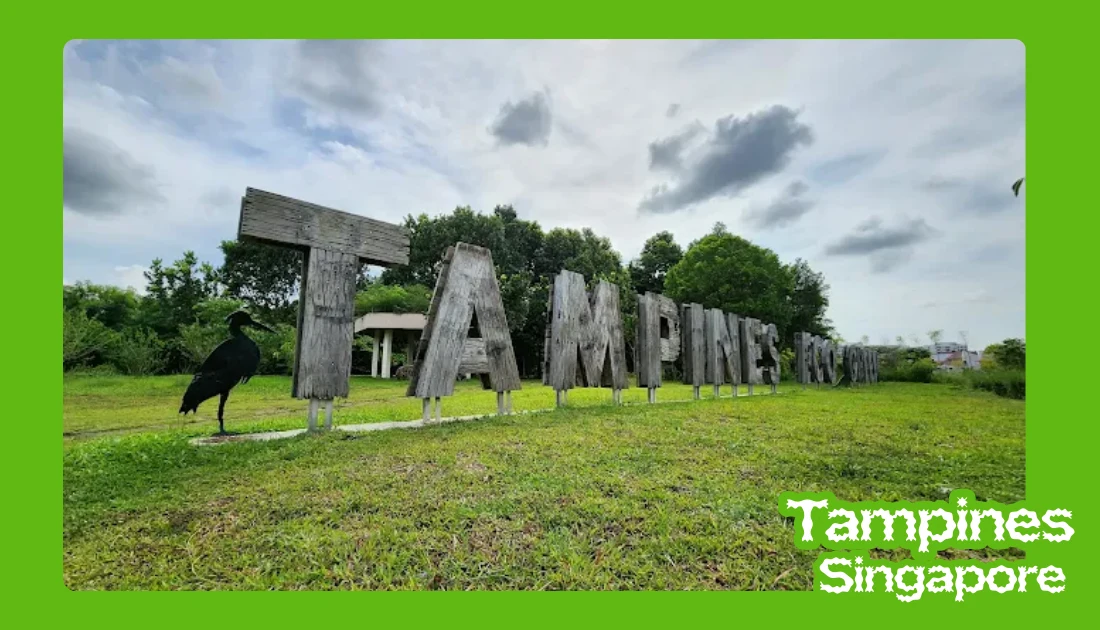
When I first started exploring Tampines, I expected the usual mix of shopping malls, residential blocks, cafés, and busy town-centre spaces. Tampines Eco Green gave me a completely different experience of the area. This is a 36.5-hectare ecological park where the natural environment takes centre stage — instead of wide concrete paths and manicured gardens, there are dirt and grass trails, freshwater ponds, marshland, secondary forest, and open grassland. That difference is exactly what makes it interesting. It feels like a place to slow down rather than rush through, and I’d come here for a nature walk, birdwatching, photography, or simply some time outdoors away from the more developed parts of Tampines.
Service options: Swings
Address: Tampines Ave 9, Singapore 520491
Opened: 24 April 2011
Management: National Parks Board (NParks)
Opening Hours:
| Sunday | 7:30 am–7:30 pm |
| Monday | 7:30 am–7:30 pm |
| Tuesday | 7:30 am–7:30 pm |
| Wednesday | 7:30 am–7:30 pm |
| Thursday | 7:30 am–7:30 pm |
| Friday | 7:30 am–7:30 pm |
| Saturday | 7:30 am–7:30 pm |
Note: hours may differ during certain public holidays, including Chinese New Year — worth checking ahead if your visit falls near one.
My First Impression of Tampines Eco Green
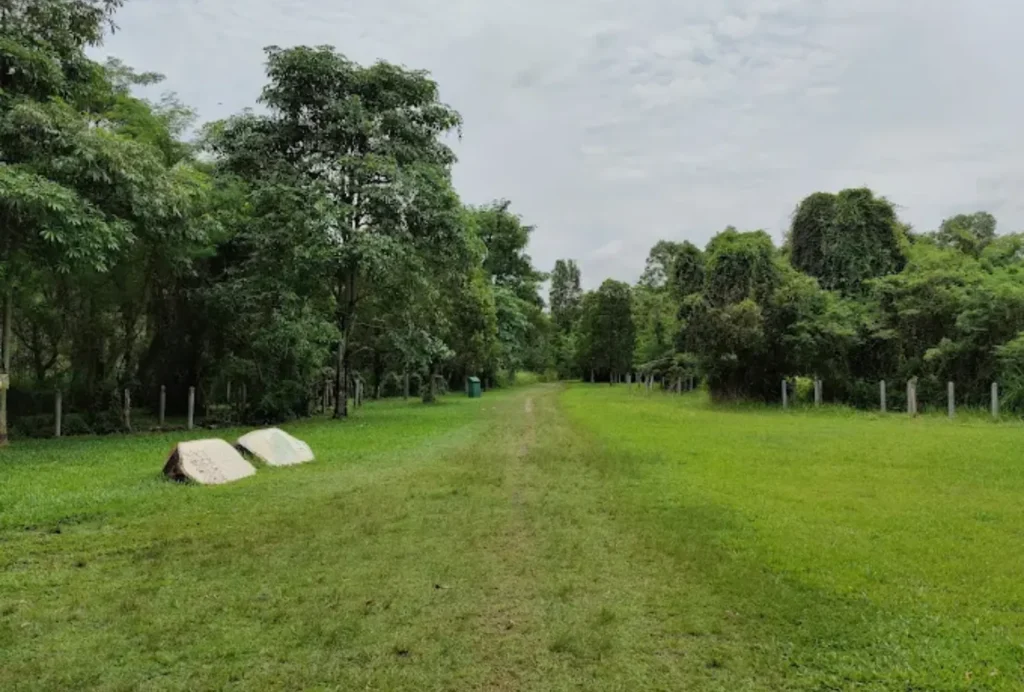
The first thing I’d tell someone planning a visit is not to expect a typical Singapore recreational park. Tampines Eco Green was designed around minimal human intrusion, so the landscape has been kept in a much more natural condition than other parks — it can look less manicured, and that’s genuinely part of its appeal to me. The paths run through grassland, wetlands, and secondary forest rather than being surrounded by heavily landscaped areas, and the use of natural materials — like benches made from fallen trees — reinforces the sense that the park works with its surroundings rather than reshaping them.
There are also no extensive commercial facilities inside, so I’d prepare before entering — water, suitable footwear, insect repellent, and basic personal items make the visit much easier.
Where Tampines Eco Green Is Located
The park is at Tampines Avenue 9, Singapore 520491, within the developed Tampines area — but once you’re on the trails, the environment shifts noticeably toward nature. It connects with Sun Plaza Park and the Sungei Tampines Garden Bridge, which are useful landmarks for understanding the wider layout. For a first visit, I’d check the entrance point carefully, since the park has more than one access route.
A Park Built Around Nature
What makes Tampines Eco Green different is the philosophy behind its landscape. Instead of a highly manicured recreational space, it retains habitats resembling a savannah ecosystem, alongside freshwater wetlands and secondary forest. You won’t find the extensive playgrounds, landscaped gardens, or commercial facilities you might expect elsewhere. Instead, the experience revolves around natural grassland, secondary forest, freshwater ponds, marshes, native vegetation, bird habitats, natural walking trails, and wildlife observation. I think that’s important for visitors to understand before arriving — the environment itself is the attraction.
History & Development
Tampines Eco Green opened to the public on 24 April 2011 and is managed by the National Parks Board (NParks), developed with biodiversity protection in mind rather than simply converting the land into another conventional recreational space. One particularly interesting detail is the decision not to install nighttime lighting throughout the park — this helps preserve a darker environment for wildlife that depends on natural day-night cycles for feeding and breeding. Knowing this history made the park’s less-developed appearance easier for me to understand: the natural character isn’t accidental, it’s a core part of the park’s purpose. If you’re after a more traditional park experience nearby, Tampines Boulevard Park offers a different, more conventional outdoor option close by.
Accessibility Information
Wheelchair Access: The dirt paths and inner trails aren’t wheelchair accessible, but the footpath running along the park’s perimeter is. Visitors with mobility challenges can enjoy the outer loop while the inner trails stay in their natural state to preserve the ecosystem.
Parking: There’s no dedicated car park inside Tampines Eco Green — accessible parking is available at nearby HDB blocks instead.
Park Map & Layout
Tampines Eco Green has three main interconnecting trails forming a rough triangle:
- Diversity Trail: 1.2 km, easy difficulty
- Marsh Trail: 0.8 km (shortest), easy difficulty
- Forest Trail: 1 km, easy difficulty
- Total Loop: approximately 3 km
All trails are flat and relatively easy, though the inner paths are natural earth and grass rather than paved surfaces — which changed how I thought about footwear before heading in. The trails weave through secondary forest, freshwater wetlands, open grassland, and marshes, with three bird hides positioned to overlook the water features.
Key Features on the Map:
- Main entrance along Tampines Avenue 12
- Secondary entrance via Sun Plaza Park
- Sungei Tampines Garden Bridge connector
- Interconnected pond areas
- Eco-toilet facility near the main shelter
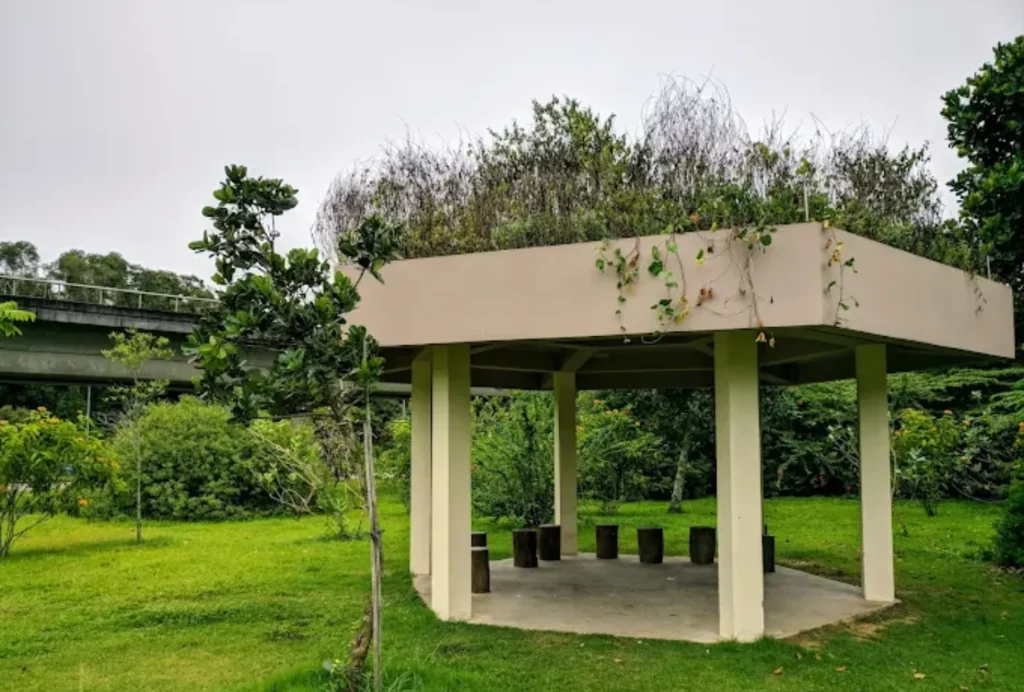
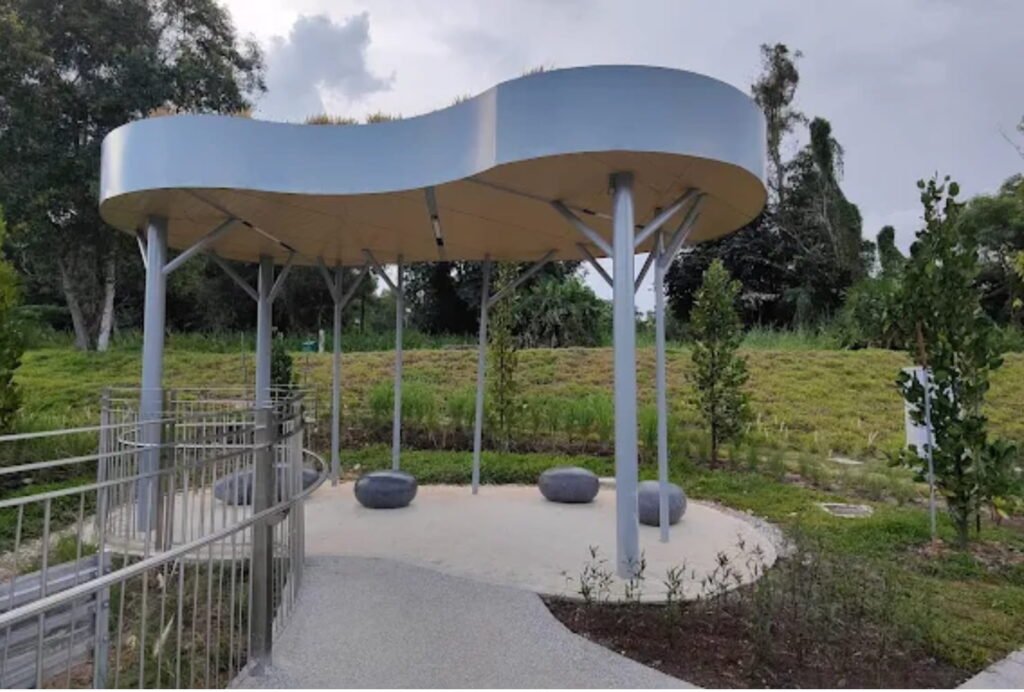
- Thunderstorm shelters with green roofs (throughout park)
- Bird observation hides
Trails & Walking Paths
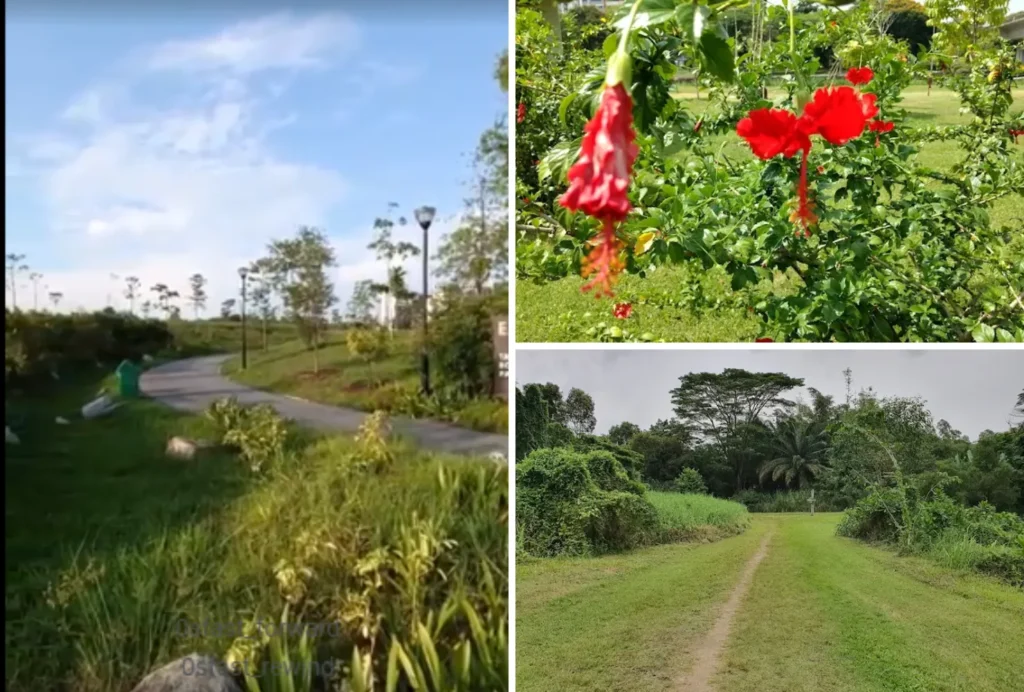
Diversity Trail (1.2 km)
The longest of the three, this route passes through Manila grass and secondary forest, with trees forming a canopy along sections, before opening toward freshwater ponds. I’d consider this a good route for a general introduction to the park, since it touches several different habitats rather than focusing on just one.
Best For: Photography, nature observation, leisurely family walks. Duration: 30–40 minutes. Difficulty: Easy.
Marsh Trail (0.8 km)
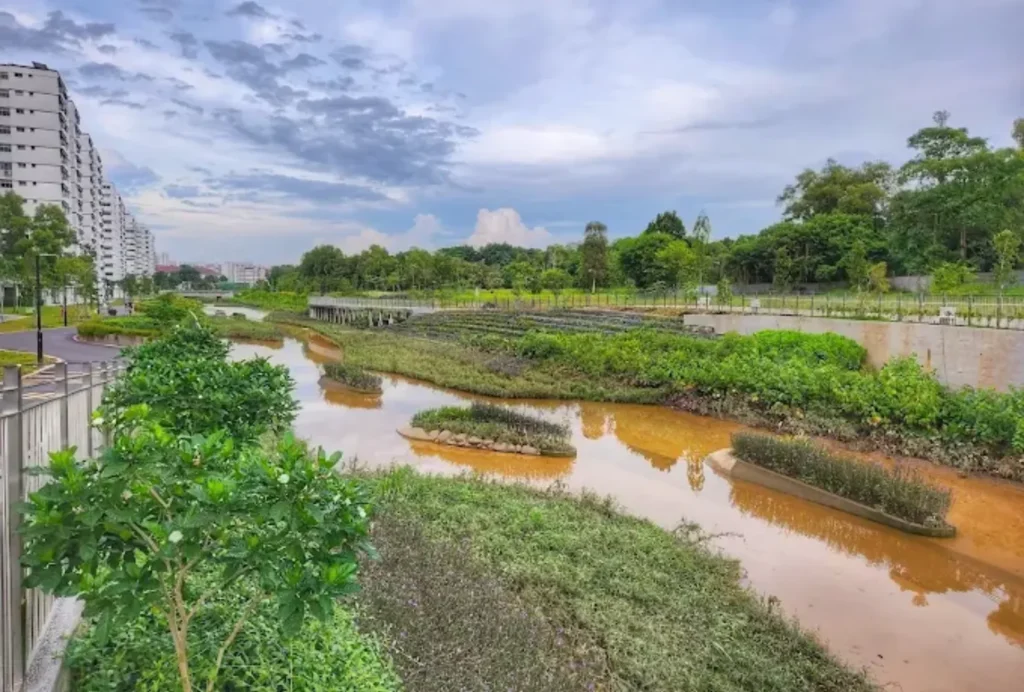
The shortest route, taking visitors through the park’s freshwater wetland ecosystem, past natural marshes and swales — vegetated channels that help drain excess groundwater during rainy periods. If wetland ecology or birdwatching is your main interest, this is the trail I’d pay closest attention to.
Best For: Birdwatching, wetland ecology. Duration: 20–30 minutes. Difficulty: Easy.
Forest Trail (1 km)
A shaded route with a naturally cooler feel thanks to the tree canopy, and one I’d choose specifically on a hot day. It’s also associated with butterfly-spotting — keep an eye out for the Common Grass Yellow and Blue Pansy.
Best For: Nature walks on hot days, butterfly observation. Duration: 25–35 minutes. Difficulty: Easy.
Full Park Loop (3 km)
Combining all three trails makes a full circuit of about 3 km, taking roughly 1.5 to 2 hours at a leisurely pace — with the option to shorten it if time’s limited. I like having that flexibility, since a three-kilometre nature walk feels very different depending on whether you’re there for exercise, photography, birdwatching, or a visit with kids.
Tips for Trail Walking:
- Start early (7:30–8:30 AM) for cooler weather and more animal activity
- Bring insect repellent — mosquitoes can be prevalent
- Wear sturdy, closed-toe shoes for the natural terrain
- Bring plenty of water — there are no refreshment facilities
- Pack hand sanitiser or wipes (the eco-toilet has no running water)
- Use the park map at entrances to navigate
Wildlife & Birdwatching
Birdwatching is one of the biggest reasons I’d put Tampines Eco Green on a nature-focused Tampines itinerary. Over 75 bird species have been recorded here, which makes the mix of ponds, marshes, forest, and grassland especially interesting — different habitats bring out different birds.
Notable species include:
- Purple Heron: the tallest bird in the park, growing up to around 1m in height
- Baya Weaver: known for its intricately woven nests
- Hornbills: loud and distinctive, often spotted along Sungei Tampines — listen for the call before looking up
- Others: various warblers, eagles, egrets, and herons
My Birdwatching Tips:
- Go early in the day, and move slowly and quietly
- Bring binoculars and a bird identification guide or app
- Spend time near the three bird hides and watch pond and wetland areas carefully
- Migratory season (October–March) tends to bring the most variety
Bird activity is generally described as highest around 6:30–8:30 AM, though the park itself only opens at 7:30 AM — so I’d plan within the official hours rather than assuming earlier access.
Freshwater Wetland Ecosystem
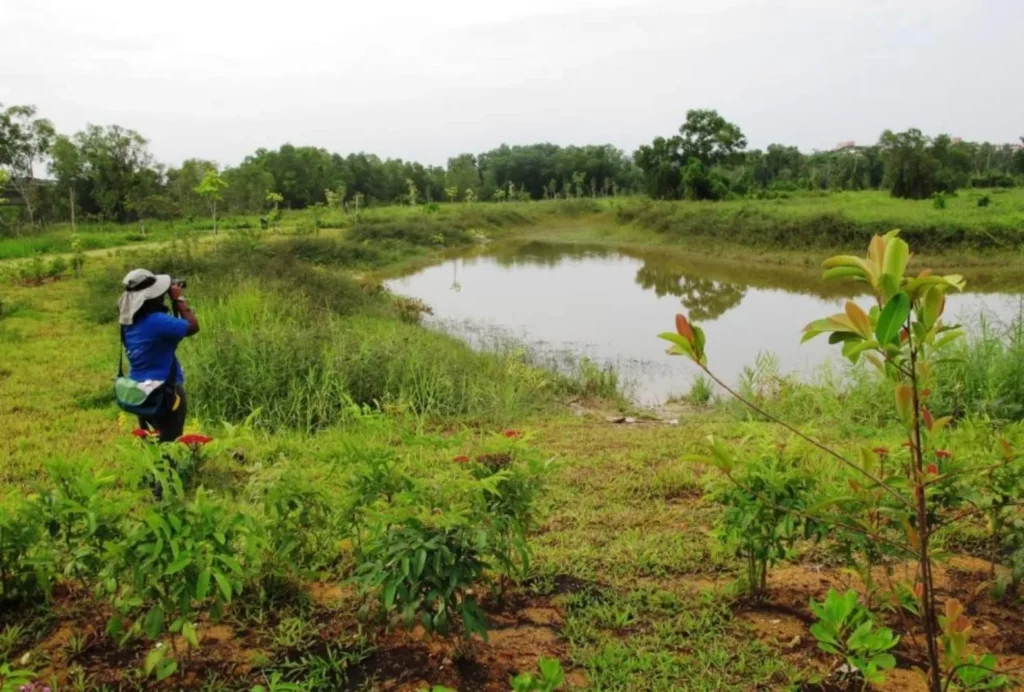
The park’s seven interconnected ponds form a thriving freshwater ecosystem, supporting aquatic life and providing critical habitat for migratory birds. The ponds are intentionally left with overhanging vegetation — at first glance this can look a little unkempt, but it’s essential for wildlife protection rather than a maintenance oversight.
Wildlife in & Around the Ponds:
- Monitor lizards
- Water snakes
- Dragonflies and damselflies
- Aquatic insects
- Native fish species
Flora & Plant Life
The secondary forest holds native plant species adapted to Singapore’s tropical climate, with the park emphasising native ecosystem plants over exotic species. Tree types include tall native forest species forming canopy coverage, Manila grass carpeting the trail floors (which has a genuinely different feel underfoot compared to a paved path), freshwater marsh vegetation, and various flowering plants that vary seasonally — so a return visit can bring a noticeably different botanical experience.
Insects & Butterflies
Butterflies are abundant, particularly along the Forest Trail — look for the Blue Pansy and Common Grass Yellow, plus dragonflies around the pond edges. I’d slow down in these areas instead of treating the walk purely as exercise; small insects and butterflies are easy to miss if you’re focused only on the path ahead.
Park Facilities & Amenities
The Eco-Toilet
The most distinctive facility here is the waterless composting eco-toilet — Singapore’s first of its kind in a public park. Instead of conventional flushing, the system uses bacteria and wood shavings to convert waste into compost without water or chemicals. One practical detail worth remembering: there’s no running water for hand washing, so I’d carry hand sanitiser or wipes. The facility is designed to stay odour-free through ventilation and uses biodegradable cleaning agents. If you’d rather use a conventional flushing toilet, Sun Plaza Park is the nearest alternative.
Shelters
Several thunderstorm shelters with green roofs are spread throughout the park, offering shade or temporary cover if the weather turns — and since Singapore’s weather can shift quickly, I’d still check the forecast before setting out on a longer trail.
Drinking Water
There are no water fountains or refreshment facilities inside the park. This is one of the most important practical points to remember — I wouldn’t rely on being able to buy a drink once inside, especially if attempting the full 3 km loop.
Seating & Viewing Areas
Benches made from fallen or dead trees are placed throughout, blending naturally into the landscape rather than looking like conventional park furniture. Several viewpoints overlook the ponds and wetlands — good spots to pause for photography or just quiet observation.
Rules I’d Follow
Because the park is designed to protect natural habitats, it’s worth treating it differently from a conventional recreation park. Restrictions include:
- No feeding wildlife
- No fishing
- No camping or BBQs
- No littering
- No removing plants or specimens
- No mass gatherings
- No cycling on the trails (push bikes only)
- Pets are not permitted, in order to protect wildlife
These rules exist to preserve the park’s delicate ecosystems and let wildlife thrive without human interference. For me, the simplest approach is to leave the environment exactly as I found it.
Best Times to Visit
Seasonal: Cooler months (November–January) tend to be more comfortable for walking, with migratory birds present. Early morning (7:30–9:00 AM) is best for wildlife observation and photography, while late afternoon (4:00–6:30 PM) works well for softer photography light, even if animal activity is lower.
Weather tips: I’d avoid midday visits (11 AM–3 PM) during hot months, check the forecast during monsoon seasons (roughly Nov–Jan and Jun–Sep), and bring an umbrella or rain jacket — the canopy offers some shelter, but afternoon thunderstorms are common.
Visiting With Children
I think this can be a good family destination, but it’s worth setting expectations first — this isn’t a conventional playground park. There are no large slides or climbing structures inside the nature park itself. Instead, children get to experience birds, butterflies, monitor lizards, ponds, forest, grassland, wetland habitats, and natural walking trails, which suits children aged 5 and above especially well when framed as a nature-and-learning outing rather than a play visit.
If you’re visiting with kids, I’d bring water and snacks, turn the walk into a nature scavenger hunt, talk through wildlife behaviour beforehand, allow extra time for exploring, and pack insect repellent and hand sanitiser.
Nearby Playgrounds: the Tampines Boulevard Park Nature Playgarden sits adjacent to the main entrance with a sandpit and swings, and a larger playground between Blocks 496C and 495A — reachable via the Sungei Tampines Garden Bridge — has climbing ropes, netted bridges, and tall slides. Combining the nature walk with one of these gives kids a bit of both.
Photography at Tampines Eco Green
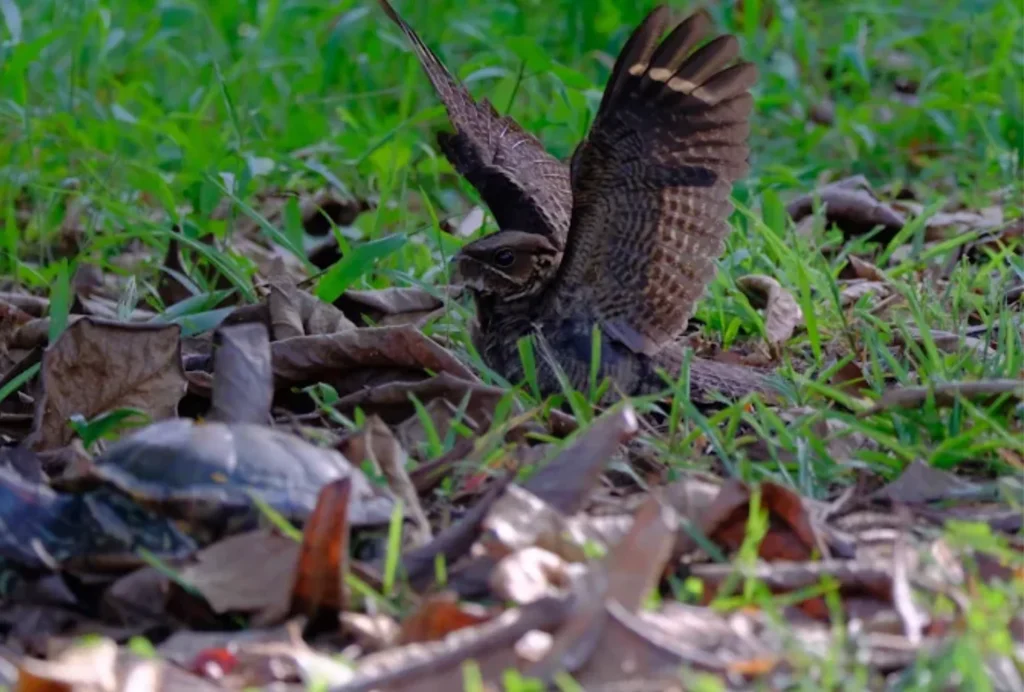
I’d consider this a genuinely good spot for nature photography, since there are several different environments within one park — freshwater ponds, wetland vegetation, grassland, forest canopy, butterflies, dragonflies, birds, and natural trail landscapes. The three bird hides are especially useful if wildlife photography is your priority; I’d bring a zoom lens or binoculars and avoid getting close to animals just for a shot. Early morning tends to offer the best light and the most activity.
Conservation & Sustainability
One of the strongest things about Tampines Eco Green is that conservation is built into the design, not added as decoration. The park provides habitat for native flora and fauna, acts as a stepping stone in the broader nature corridor via connected park connectors, and shows that biodiversity can genuinely thrive within a densely populated area.
Details like the eco-toilet, the fallen-tree benches, and the absence of nighttime lighting all serve that same purpose — protecting nocturnal wildlife and reducing environmental impact rather than just looking rustic. As a visitor, I’d follow the park’s rules, take only photographs, avoid disturbing animals, carry out all rubbish, and report any damage to NParks. NParks also runs volunteer opportunities for anyone interested in getting more involved in conservation work here.
How to Get to Tampines Eco Green
By MRT
The park is within walking distance of Tampines MRT Station via Sun Plaza Park, following the park connector signage. For a first visit, I’d check the exact walking route to the specific entrance you’re heading for, since the park has multiple access points.
By Bus
Bus services connect the Tampines area to the park’s surroundings. Because there are different access points, I’d check current routes and the closest stop to your intended entrance via a transport app before setting off, rather than relying on an old route description.
By Car
There’s no official car park inside Tampines Eco Green, so you’ll need to park at nearby HDB blocks and walk over — accessible parking is available near these blocks. I wouldn’t assume there’s extensive dedicated parking right at the park itself; allow a short walk from wherever you park.
By Bicycle & Park Connectors
Cycling isn’t permitted inside the park, but you can push your bike or lock it near an entrance. The wider area connects to Singapore’s park connector network, including the Sungei Tampines Garden Bridge, so cycling to the park is a reasonable option even if you can’t cycle within it.
My Practical Checklist
If I were preparing for a visit, this is what I’d bring: drinking water, closed-toe walking shoes, insect repellent, hand sanitiser or wipes, an umbrella or rain jacket, binoculars if birdwatching, a camera, snacks (especially for kids), and a phone with the park map or route saved. I’d also check the weather and opening hours before leaving.
Frequently Asked Questions
Where exactly is Tampines Eco Green located?
The park is at Tampines Avenue 9, Singapore 520491, in Singapore’s eastern heartland, bordered by the Tampines Expressway, Sungei Tampines canal, and the Tampines Park Connector.
How much does it cost to enter?
Admission is free — there are no entry fees for any visitor.
What are the opening hours?
Daily from 7:30 AM to 7:30 PM. Plan to exit before then, since there’s no nighttime lighting inside the park.
What wildlife can I see?
Over 75 bird species have been recorded, including Purple Herons, Baya Weavers, and Hornbills, along with monitor lizards, water snakes, butterflies, and dragonflies.
Can I cycle in the park?
No — cycling isn’t permitted on the trails, to protect the ecosystem and visitor safety. You can push a bike or lock it near an entrance and walk the trails instead.
Are the trails wheelchair accessible?
The inner trails aren’t, since they’re natural earth and grass, but the paved outer footpath around the park’s perimeter is wheelchair-friendly.
My Final Thoughts
Tampines Eco Green showed me a side of Tampines very different from the busy commercial centre I first associated with the neighbourhood. The three trails move through forest, grassland, freshwater wetlands, and marsh, and the more than 75 recorded bird species make it especially worthwhile for birdwatchers — with butterflies, dragonflies, and other small wildlife adding to the walk along the way.
What I appreciated most is that the park doesn’t try to turn nature into a conventional attraction. Facilities are limited on purpose, the trails stay natural, there’s no nighttime lighting, and conservation runs through every design choice. That also means coming prepared — no refreshment facilities, natural (not paved) inner trails, an eco-toilet with its own quirks, and weather that can shift quickly.
My advice: slow down and let the park be what it was designed to be. If you’re exploring Tampines and want something quieter and more nature-focused than the malls and commercial areas, this is one I’d genuinely keep on the list — and if you need to cool off after a warm walk, Tampines Swimming Complex isn’t far away.