

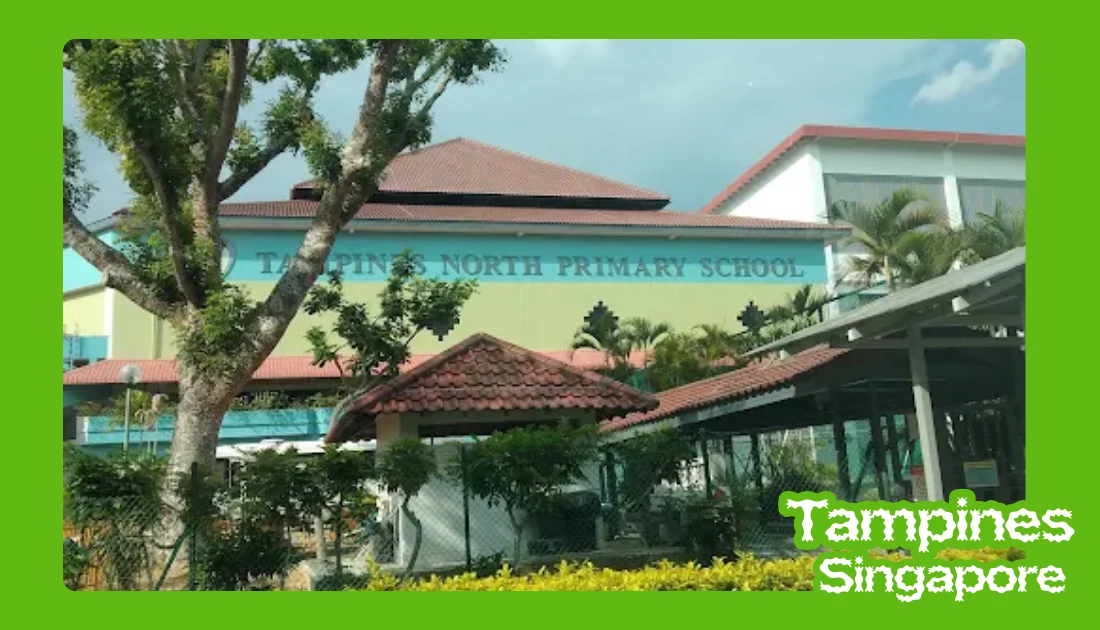
Tampines North Primary School | What I Noticed About the School
When I first visited Tampines North Primary School, I was mainly interested in seeing what the school and its surrounding area were actually like, rather than simply reading about it online. The school is at 30 Tampines Avenue 9, Singapore 529565, with the office open 7:30am to 5:30pm on schooling days, and 7:30am to 5:00pm during school holidays, Monday to Friday.
My First Impression
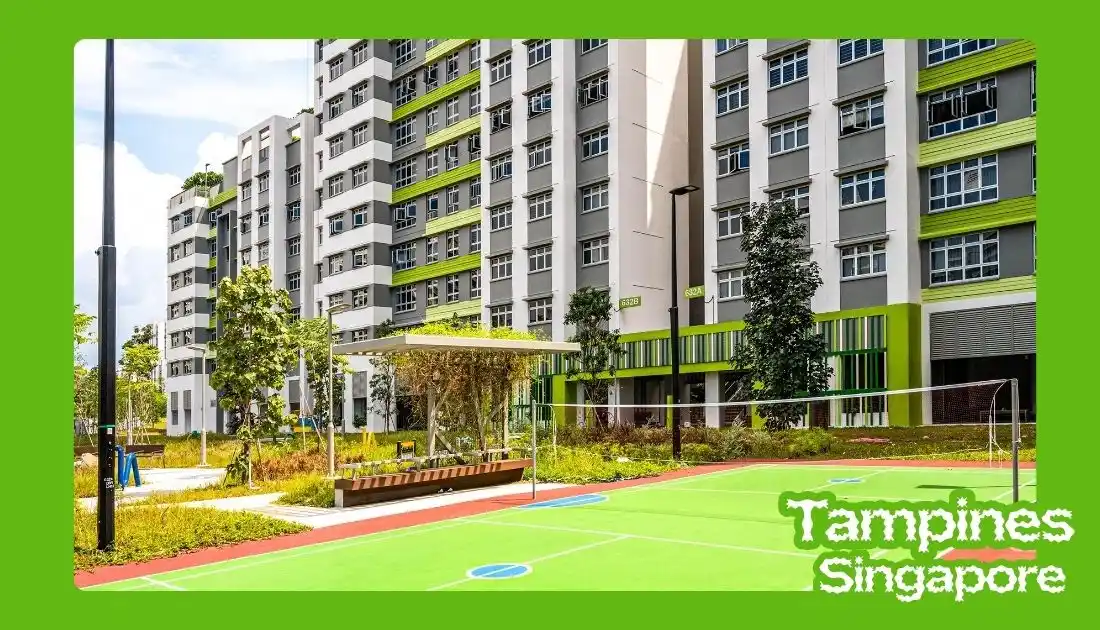
My first impression was that this is very much a neighbourhood primary school serving the growing Tampines North community. The surroundings felt different from the older, more established parts of central Tampines, with newer residential developments around the area that the school fits naturally into. I also noticed how important the location is for families with young children, being within the residential neighbourhood means some families living nearby can potentially walk or cycle to school instead of relying entirely on cars or public transport.
A Real Look at the School’s History

The school was established in 1994, starting with 322 students and 18 teachers under founding principal Mr. Lim Peng Hua. In its first year, classes were actually held at Qiaonan Primary School, before the school moved to its own permanent premises in 1995. By January 2004, the current school building was completed. As of 2026, the school is led by Principal Mrs. Ratna Elangovan, and that year specifically marked a milestone, the first time the school welcomed 10 classes of Primary 1 students in a single intake. The school’s actual motto is “Confident Learners, Critical Thinkers, Rooted in Values,” which reflects a bilingual, student-centric approach to holistic development.
Looking Around the School Campus

When I looked at the campus, I was interested in more than simply how modern the buildings appeared. A primary school needs to accommodate several different parts of a child’s day, classroom learning, physical activity, social interaction, assemblies, and after-school activities. The facilities described for the school include classrooms, learning spaces, sports areas, and other spaces intended to support pupils beyond their regular lessons.
The Learning Environment
At Tampines North Primary School, the focus is on providing pupils with an environment where academic learning can happen alongside character development and other activities. I particularly liked the idea of having different learning spaces rather than treating the classroom as the only place where learning takes place. For younger pupils, having areas where they can read, work together, or participate in activities can make the school day feel more varied.
Library and Reading Spaces
The library was another part of the school environment that interested me. For me, a good primary-school library should feel like somewhere pupils actually want to spend time rather than simply being a room filled with books. Reading spaces can support independent learning and give children an opportunity to explore subjects outside their regular lessons, and I like the fact that reading can become part of a child’s everyday routine rather than something limited to homework.
Sports and Outdoor Areas
I always look at outdoor areas when visiting a primary school because physical activity is such an important part of a child’s school experience. The school has spaces intended for physical education, recreation, and sports activities, providing a useful break from classroom learning, and pupils who enjoy physical activities need somewhere appropriate to practise and participate as part of the wider CCA environment.
CCAs and Activities

One of the things I’d personally investigate before choosing a school is the range of CCAs available. Tampines North Primary School provides opportunities for pupils to participate in activities outside their academic lessons, spanning sports, performing arts, clubs, and other interest-based activities. What I like about this part of primary education is that children get an opportunity to discover interests that may not appear in their regular classroom work. For parents, I’d recommend checking the school’s current CCA list directly, since offerings can change from one year to another.
Academic Learning and PSLE
PSLE is naturally an important consideration for parents researching primary schools. However, I’d be careful about judging a school purely by PSLE results, and I want to flag something specific here: Singapore’s MOE doesn’t publish comparative PSLE results between individual primary schools, so any claim about a school’s PSLE performance “relative to other schools” isn’t something I can verify or would want to repeat as fact.
What I found genuinely interesting instead was the school’s broader educational environment. The primary-school years involve building foundational skills in subjects such as English, Mathematics, Science, and Mother Tongue, while also developing habits such as responsibility, independence, and time management. PSLE is an important milestone at the end of Primary 6, but I’d personally look at the whole six-year experience rather than treating one examination outcome as the complete picture of a school.
What I Noticed About the School’s Values
The school’s emphasis on character development also caught my attention. Primary education isn’t only about completing worksheets and preparing for examinations, children are also learning how to interact with classmates, manage responsibilities, and become more independent. Values such as respect, responsibility, resilience, integrity, and care are particularly relevant during these years, and they make sense running alongside the academic curriculum, since children are developing socially at the same time they’re developing academically.
Student Life

Although I wasn’t experiencing the school as a pupil, I could still appreciate how different parts of the campus are intended to support everyday student life. A primary school needs to balance lessons with recess, physical activity, CCAs, assemblies, and other school activities. That variety matters to me, because a child’s experience at school isn’t limited to what happens during a single lesson, and the surrounding Tampines North neighbourhood gives the school a strong community context on top of that.
Student Support and Enrichment
Another area I’d look into as a parent is how the school supports pupils with different learning needs. Not every child learns at exactly the same pace, so academic support and enrichment can both be useful, support programmes for pupils who need additional assistance, and enrichment activities for others to explore subjects in greater depth. I wouldn’t assume every programme listed online is available every year, though, for anyone considering the school, I’d check the latest information directly with the school or MOE.
School Events
School events are another part of primary education that I find interesting because they bring together pupils, teachers, and families. Activities such as sports events, performances, celebrations, and community programmes give pupils opportunities to participate outside their normal lessons. For younger children especially, these events can become some of their most memorable parts of primary school.
Parent and Community Connection

The location in Tampines North makes community connection particularly relevant. The surrounding neighbourhood has a large residential population, so the school naturally forms part of the everyday environment for nearby families. I think this is one of the strongest practical aspects of having a school located within a residential community, parents can think about the school not just as a place their child attends from Monday to Friday, but as part of the neighbourhood they already live in.
Getting to Tampines North Primary School
By MRT and Bus
Tampines MRT is the main MRT interchange serving the wider Tampines area, while Tampines West MRT is another option depending on the starting point. For families travelling from farther away, I’d combine the MRT journey with a bus or taxi rather than assuming the entire trip can be completed on foot. Because bus routes and stop arrangements can change, I’d check the current journey on a maps app before travelling rather than relying on a fixed route from an older article.
Walking and Cycling
If I lived within Tampines North, walking or cycling would be one of the first options I’d consider, since the residential nature of the area means the school is positioned within the community rather than being isolated from nearby homes. For younger children, parents would still need to consider the individual route, road crossings, and the child’s age rather than assuming every route is equally suitable.
By Car or Taxi
Driving is another practical option, particularly when parents need to drop off or collect children. The important thing I’d keep in mind is school-hour traffic, even a short journey can take longer during the morning and afternoon peaks, so I’d allow additional time rather than planning the trip down to the minute.
What I Would Check Before Applying
If I were researching the school for a child, I wouldn’t make the decision based only on an online article. I’d check the latest Primary 1 registration information, current admission phases and eligibility, distance and home-school registration requirements, current CCA offerings, student care arrangements, school hours and dismissal arrangements, current school programmes, transport options from home, and any open-house or parent engagement opportunities. The admission process is governed by MOE’s current Primary 1 registration framework, so I’d always refer to the latest official information rather than relying on an older article, including this one.
A Note on How I Put This Together
The history in this piece, the 1994 founding date, the 322 students and 18 teachers, the temporary period at Qiaonan Primary School, and the founding and current principals’ names, are all drawn directly from the school’s own official website. I also want to be transparent that I deliberately dropped two things from earlier drafts: a claim about the school’s PSLE performance “relative to other schools,” which isn’t something MOE publishes or that I could verify, and a generic “Alumni Insights and Success Stories” section that contained no specific, checkable claims at all. I’d rather leave those out than repeat unverifiable content dressed up as fact.
My Final Take
My look into Tampines North Primary School gave me a better appreciation of how closely the school is connected to the growing Tampines North neighbourhood, and a founding story that’s more specific and grounded than a generic “established to meet growing demand” description suggests. What I found most interesting wasn’t simply the school building itself, it was the combination of the campus, surrounding residential area, accessibility, and the wider educational environment, now over three decades into its history since that first cohort of 322 students. For parents researching primary schools in Tampines North, I think the location is one of the first practical things worth considering, alongside the current admission requirements, educational programmes, CCAs, and student support, rather than judging the school purely from its location or from unverifiable claims about PSLE rankings.